
Quick answer
- The historical Santa is based mainly on Saint Nicholas, who lived during the fourth century.
- Saint Nicholas was probably born around 270 CE and served as a bishop in Myra, in modern-day Türkiye.
- That makes the Saint Nicholas tradition more than 1,700 years old.
- The modern Santa Claus developed through Dutch, British, German, and American customs.
- For children, Santa can be explained as a Christmas tradition built from stories, generosity, and family rituals.
How Old Is Santa Claus? The Short Answer
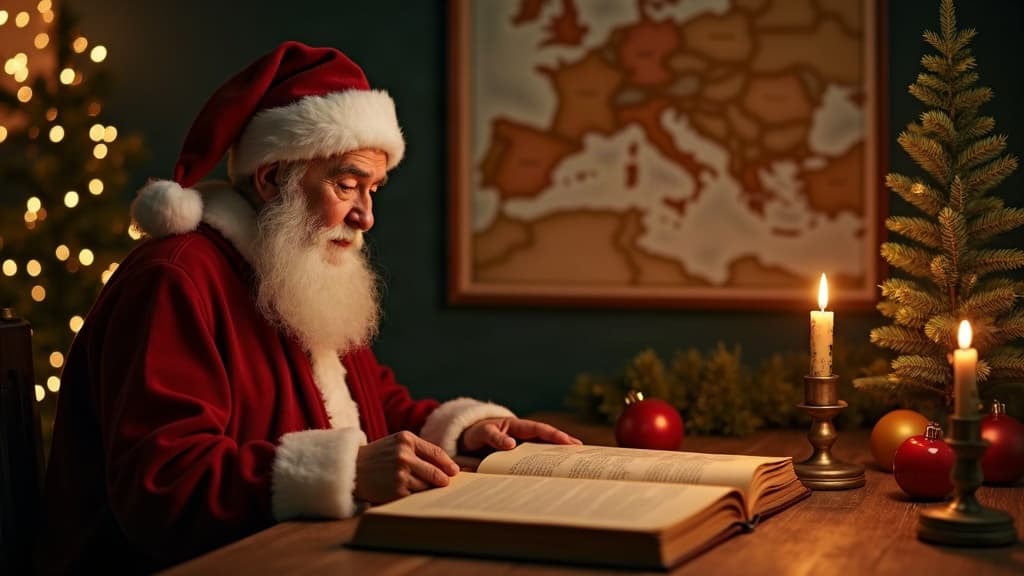
How old is Santa Claus? The historical figure behind Santa is Saint Nicholas, a fourth-century bishop who was probably born around 270 CE. That makes the Saint Nicholas tradition more than 1,700 years old. The modern Santa Claus of Christmas books, films, and family stories has no official birth date or fixed age.
Saint Nicholas lived in Myra, a city in the Roman province of Lycia in what is now Türkiye. He became known for helping people in need, especially children and families facing hardship. Stories about his secret gifts spread across Europe after his death. Each region added its own customs, clothing, foods, songs, and holiday characters.
The name Santa Claus comes from the Dutch Sinterklaas, a shortened form of Sint Nikolaas, meaning Saint Nicholas. Dutch settlers carried the tradition to New Amsterdam, now New York City, during the seventeenth century. American writers and illustrators later reshaped Sinterklaas into the familiar Santa with a sleigh, reindeer, North Pole workshop, and red suit.
The clearest answer depends on which Santa you mean. Saint Nicholas was a real person who lived about 1,700 years ago. The modern Christmas Santa is a tradition that has developed over centuries and still changes from one household to the next.
Who Was Saint Nicholas, the Historical Santa?
Saint Nicholas was a Christian bishop associated with Myra, an ancient city near the Mediterranean coast. Historians generally place his life in the late third and early fourth centuries, although many details come from later religious traditions rather than records written during his lifetime. He is believed to have died on December 6, probably around 343 CE. That date became Saint Nicholas Day in many parts of Europe.
The best-known stories describe Nicholas giving help in secret. One tale says he provided gold for three sisters whose family could not afford their marriage arrangements. In some versions, he dropped the gold through a window, and it landed in a stocking or shoe near the fire. The story helped connect Saint Nicholas with anonymous giving and small presents.
Nicholas was also remembered as a protector of children, sailors, travelers, and people in danger. Churches dedicated to him appeared throughout Europe. The Saint Nicholas tradition shows how a bishop from Lycia became one of the world’s best-known gift-giving figures.
Families can honor the historical story without treating every legend as proven fact. A useful explanation is that people remembered Nicholas for his generosity, then retold those stories across generations. His example gave families a way to discuss giving, compassion, and attention to people who might otherwise be overlooked.
Make it magical with a video from Santa
Santa says your child's name, city and proudest achievement — in a real personalized video. Watch a free preview in 60 seconds.
How Santa Claus Became the Modern Christmas Figure
The Santa children recognize today grew from several cultural layers. In the Netherlands, Sinterklaas traditionally arrives on or near December 5, the evening before Saint Nicholas Day. Children may leave shoes ready for small treats such as pepernoten, chocolate letters, or mandarins. Dutch settlers carried parts of this custom to New York.
In English-speaking countries, Father Christmas developed as a personification of Christmas cheer. Older images often show him in long robes, sometimes green, rather than the short red suit associated with Santa today. In the United States, the 1823 poem “A Visit from St. Nicholas,” commonly called “’Twas the Night Before Christmas,” helped popularize a sleigh, reindeer, and a cheerful visitor arriving at night.
The illustrator Thomas Nast added influential visual details in drawings published in Harper’s Weekly beginning in 1863. His work connected Santa with the North Pole, a workshop, and a rounder, bearded appearance. Later illustrations, advertisements, films, and department-store displays made the image still more familiar.
This history helps explain why Santa looks different in books and why some families celebrate on December 5, December 24, or December 25. There is no worldwide Santa rulebook. The character has always adapted to local customs while keeping one central idea: generous giving.

How Old Is Santa Claus in Different Christmas Traditions?
Santa’s age and name change slightly depending on the tradition. In Greece, Saint Nicholas is known as Agios Nikolaos and has a strong connection with sailors and the sea. In parts of Europe, Sinterklaas arrives before Christmas. In Britain, Father Christmas represents celebration, feasting, and hospitality. In France, Père Noël brings gifts on Christmas Eve or Christmas Day, depending on the family.
In Finland, many families associate Santa with Korvatunturi in Lapland, although the stories differ from the North Pole version. In Italy, children may also hear about La Befana, an old woman who delivers gifts around Epiphany on January 6. These figures are not identical, but they share themes of kindness, nighttime visits, and presents for children.
- Saint Nicholas: A fourth-century bishop connected with secret generosity and December 6.
- Sinterklaas: A Dutch tradition celebrated especially on December 5 and 6.
- Father Christmas: A British Christmas figure linked with feasting, good cheer, and hospitality.
- Santa Claus: The modern American figure shaped by European traditions and nineteenth-century writing.
- Père Noël and other regional figures: Local versions that reflect each country’s language and customs.
The official Türkiye tourism information highlights the connection between Saint Nicholas and the ancient region of Lycia. These regional traditions show children that Santa belongs to a large family of winter gift-giving stories, not just one costume or one address.
Fun Facts About Santa’s Age and History
Santa’s story becomes easier to follow when you put its dates and places on a timeline. Saint Nicholas is associated with Patara, where he may have been born, and Myra, where he served as a bishop. Both places were in Lycia, a region on the southern coast of modern Türkiye. Myra’s ancient ruins and church traditions remain important to visitors interested in Saint Nicholas.
- Around 270 CE: The approximate birth period traditionally assigned to Nicholas.
- Around 343 CE: The approximate year of his death, although the exact date is uncertain.
- December 6: Saint Nicholas Day in many Christian traditions.
- The 1600s: Dutch Sinterklaas customs reached New Amsterdam with Dutch settlers.
- 1823: “A Visit from St. Nicholas” helped popularize Santa’s sleigh and reindeer in the United States.
- 1863 onward: Thomas Nast’s Harper’s Weekly illustrations shaped the American Santa image.
- December 24 and 25: Common gift-giving dates for modern Christmas Santa traditions.
Food traditions reveal how local customs became part of the holiday. Dutch celebrations may include spiced pepernoten and chocolate letters. In Britain, families may serve Christmas pudding, mince pies, or a roast dinner. In the United States, children often leave cookies and milk, while some families choose carrots or oats for the reindeer. None of these foods is required; each is a household signal that makes the story personal.
Santa’s reindeer names also have a literary history. Dasher, Dancer, Prancer, Vixen, Comet, Cupid, Donder, and Blitzen became famous through the 1823 poem. Rudolph came later, first appearing in a 1939 booklet written for a department-store promotion. Santa’s team has continued to expand long after the earliest Saint Nicholas stories.
How to Explain Santa’s Age to Kids
Young children usually want a clear answer, not a history lecture. You might say, “Santa’s story began with a kind man named Saint Nicholas more than 1,700 years ago. People kept telling stories about his generosity, and families around the world created their own Santa traditions.” That gives a concrete number without demanding that a child sort through every historical detail.
Match the explanation to your child’s age
- Ages 3–5: “Santa is part of an old Christmas story about giving and kindness.” Focus on helping, sharing, and familiar family rituals.
- Ages 6–8: Explain that Santa is connected to Saint Nicholas, a real person who lived long ago, and that different countries tell the story differently.
- Ages 9 and up: Discuss historical evidence, legends, and how poems, art, advertising, and family traditions shaped the modern character.
If a child asks whether Santa is really 1,700 years old, clarify the difference between a person and a tradition. Saint Nicholas lived in the fourth century. The Santa story has been retold and changed for many generations. You can ask what makes Santa feel real to your child: the gifts, the stories, the kindness, or the family celebration.
A personal ritual can make the explanation memorable. Families might read a Saint Nicholas story, place shoes by the door on December 5, bake cookies, or send a letter from Santa that emphasizes generosity rather than expensive presents. The goal is not to memorize dates. It is to connect history with the values your family wants to practice.
Keeping Santa’s Magic Meaningful as Children Grow
Children eventually notice clues. They may compare handwriting, question how one person visits millions of homes in a single night, or recognize a familiar pair of boots. Those questions do not have to end the warmth of the tradition. They can open a conversation about imagination, family love, and the ways people keep kindness alive.
One gentle approach is to ask what your child believes before giving a detailed answer. A child testing an idea may want reassurance. A child who already knows may be ready to join the grown-ups by helping create wonder for younger siblings. The conversation can be honest without being abrupt.
You can say, “The Santa story is based on Saint Nicholas, a person remembered for giving secretly. As children grow, they learn that grown-ups help carry on the tradition. Now you can help make Christmas meaningful for someone else.” This frames the change as a new responsibility rather than a loss.
Modern families can choose the rituals that fit their values. A child might receive a small note, hear a personalized video from Santa, or use a Santa chat to ask questions about kindness, bedtime, or helping at home. Keep promises realistic, avoid using gifts as threats, and make room for children who celebrate differently.
The lasting answer to “How old is Santa Claus?” is both historical and human. Saint Nicholas lived many centuries ago, but the tradition feels new whenever a family shares a story, leaves a treat, gives quietly, or helps a child feel remembered.
Free download
Printable Letter From Santa + Nice List Certificate
Two beautiful keepsakes from the North Pole — a personalized-style letter from Santa and an official Nice List certificate. Enter your email and Santa will unlock both PDFs for you, free.
A paper letter can't say your child's name out loud
Santa can. Watch a 30-second example — he greets your child by name, city and their proudest moment of the year.
Get a video from Santa