
Quick answer
- Answer calmly and ask what your child thinks before giving a long explanation.
- You can explain Santa as a historical person, a beloved tradition, or a symbol of generosity.
- Do not shame your child for believing, and do not pressure them to deceive younger children.
- Use simple, truthful language that matches your family’s values and your child’s age.
Is Santa Real? How to Answer Your Child First
When your child asks, “Is Santa real?” answer with calm honesty and warmth. You might say, “Santa is a real part of our family’s Christmas tradition, inspired by Saint Nicholas and kept alive through generosity, stories, and love.” Then ask, “What do you think?” This gives your child a truthful answer without turning a tender moment into a dramatic reveal.
The best response depends on why your child is asking. They may be curious, testing a theory, worried that classmates know more, or ready to understand the family tradition differently. Pause before answering. Put down your phone, make eye contact, and listen for clues in the question. A child who asks, “How can Santa visit every house?” may want a practical explanation. A child who asks, “You are Santa, right?” may be asking for permission to grow up.
A simple first-response script
- “That is a thoughtful question. What made you wonder?”
- “What part of the Santa story feels real to you?”
- “Santa means different things to different families. I will tell you how our family understands Santa.”
- “You are not in trouble for asking. You can always talk with me about this.”
Avoid rushing to prove or disprove anything. Your first job is to protect trust. Your second job is to explain the tradition in language your child can understand. If your family uses Santa letters, a letter from Santa can support the story while still leaving room for your own honest explanation.
Why Children Ask About Santa at Different Ages
Children usually revisit the Santa question as their reasoning skills change. Many preschoolers accept imaginative stories easily. Around ages 5 to 7, children may compare details, notice that Santa’s handwriting resembles a parent’s, or ask how one sleigh reaches every home. By ages 7 to 10, classmates, older siblings, online videos, and logical questions often bring the issue into the open. These ages are not a deadline. Some children want the story longer, while others prefer a clear answer sooner.
Match the answer to the question behind the question
- Preschool child: Keep the answer brief and concrete. “Santa is part of our Christmas story, and we love pretending together.”
- Early elementary child: Acknowledge the practical concern. “The story uses Christmas magic to describe generosity and surprises.”
- Older elementary child: Offer more history and invite discussion. “The Santa story grew from Saint Nicholas and many European traditions.”
- Child who seems anxious: Reassure first. “Nothing bad will happen because you asked. You are safe, and our family celebrations will continue.”
Watch your child’s body language. A child who laughs and asks follow-up questions may want a playful conversation. A child who becomes quiet may fear losing presents, family traditions, or a parent’s approval. Tell them clearly that growing older does not remove love, celebration, or belonging. You can mark the transition with a family ritual, such as choosing a charitable gift, donating a winter coat, or helping prepare a surprise for a younger cousin.
Make it magical with a video from Santa
Santa says your child's name, city and proudest achievement — in a real personalized video. Watch a free preview in 60 seconds.
The History Behind the Santa Tradition
A truthful answer can include the history of Santa. Saint Nicholas was a Christian bishop associated with Myra in Lycia, in present-day Türkiye, during the fourth century. Traditions about his generosity spread across Europe. His feast day is December 6, and in some countries children still receive small gifts or sweets on that date. The name Santa Claus developed from the Dutch Sinterklaas tradition, while the English name Father Christmas has older roots in seasonal celebration.
The modern American image formed gradually. Clement Clarke Moore’s 1823 poem, “A Visit from St. Nicholas,” helped popularize a sleigh, reindeer, and a chimney visit. Illustrator Thomas Nast added influential visual details in drawings published in the 1860s. The red-suited image became especially familiar through twentieth-century advertising and popular culture, but no single person created every part of the story. For a concise historical overview, see the Wikipedia article on Santa Claus.
A child-friendly history explanation
Try saying, “A real person named Nicholas was remembered for secretly helping people. Over hundreds of years, families added stories from different countries. That is why Santa can feel both historical and magical.” This explanation avoids claiming that every detail is literal while honoring the tradition. You can mention foods and customs your family actually knows: Italian families may talk about La Befana on January 6, Dutch families may celebrate Sinterklaas on December 5, and many American families leave cookies and milk on Christmas Eve. Other households serve panettone, gingerbread, or tamales, showing children that Christmas customs differ from family to family.

Choose an Honest Santa Explanation That Fits Your Family
There is no single correct way to handle Santa. Some families keep a literal story while children are young. Others present Santa from the beginning as a make-believe character. Many families use a middle path: Santa is rooted in a real person and represents the generosity people practice together. Decide what you believe before the conversation, so your answer sounds confident rather than defensive.
Three approaches and their practical tradeoffs
- Traditional approach: You describe Santa as a magical visitor. Pros include imaginative play and a familiar family ritual. Cons include difficult logistics and a sharper feeling of discovery for some children.
- Historical-symbolic approach: You explain that Saint Nicholas was real and that people now act as Santa. Pros include honesty, generosity, and an easy transition. Cons include younger children may need a simpler explanation.
- Imaginative-play approach: You openly call Santa a shared story or pretend tradition. Pros include clear boundaries and no surprise reveal. Cons include children may hear a different version from friends and need help responding respectfully.
You can combine approaches. Say, “We do not believe one person literally visits every home, but Santa is real in the kindness people show. When we fill a stocking, donate food, or leave a surprise, we are helping the Santa tradition live.” Do not present one choice as morally better. Families have different faiths, cultures, budgets, and boundaries. The goal is a secure relationship, not a perfect performance.
If your child asks for proof, do not manufacture elaborate evidence that could later feel deceptive. Instead, explain that traditions use symbols and imagination. A personalized video from Santa may be a joyful part of pretend play, but describe it in a way that matches your family’s approach and your child’s readiness. Avoid building a case file of fake evidence—recorded chimney noises, staged footprints, or forged receipts—if your older child is already asking for a sincere answer.
A Practical Plan for the Santa Conversation
Preparation helps you respond without panic. Choose a quiet moment rather than answering while driving, shopping, or rushing through bedtime. Start with curiosity. Repeat the child’s question so they know you heard it. Give one clear answer, then stop. Children often need time to process before asking the next question. If they ask about gifts, explain your family’s role plainly and avoid making love sound conditional on being “nice.” Gifts are chosen and paid for by adults; they are not a scorecard for a child’s worth.
Printable-worthy conversation checklist
- Pause and take one calm breath before responding.
- Ask, “What do you think?” and listen without correcting immediately.
- Name the feeling if you see one: curiosity, disappointment, excitement, or worry.
- Choose a family explanation: historical, symbolic, imaginative, or traditional.
- Use short sentences and answer only the question asked.
- Explain that presents are chosen and purchased by caring adults.
- Tell your child that asking questions never puts them in trouble.
- Decide how siblings will handle the tradition around younger children.
- Offer a new role, such as helping wrap a gift or plan an act of kindness.
- Check in again a few days later rather than forcing a final conversation.
What to say when the questions get specific
- “How does Santa get inside?” Answer: “That is one of the story’s imaginative parts. In our family, adults help create the surprises.”
- “Are you Santa?” Answer: “I help make Santa’s tradition happen in our home. The love behind it is real.”
- “Did you lie to me?” Answer: “I understand why it feels that way. I was sharing a tradition and protecting imaginative play. I am glad you asked, and I will be honest with you now.”
Keep the Magic After Your Child Learns the Truth
Learning that adults organize Santa does not have to end Christmas wonder. It can change the child’s role from recipient to helper. Invite them to write a kind note, choose a book for a community donation, bake gingerbread, or wrap a sibling’s present. Focus on the meaning of the tradition: noticing others, giving quietly, welcoming guests, and making ordinary winter days feel special. A child who once waited for a stocking can now help fill one for someone else.
Give your child a respectful script for friends. They can say, “My family celebrates Santa this way,” or “I do not want to spoil it for younger kids.” Do not require them to become a secret-keeper or accuse classmates of being wrong. Tell siblings privately what you expect, and allow them to feel disappointed if the tradition changes. A child may understand the facts and still miss the old feeling. Both reactions can be true.
Ways to create a new Santa role
- Create a kindness calendar with one realistic action per day, such as clearing the dinner table or leaving a note for a neighbor.
- Let the child choose a family dessert, such as sugar cookies, panettone, or bûche de Noël.
- Make a secret “Santa helper” envelope for anonymous good deeds.
- Read a Saint Nicholas story on December 6 and compare it with your family’s customs.
- Use a Christmas countdown to give the season structure without making every day about gifts.
If your family uses an online Santa video service, invite an older child to help select a message for a younger sibling. Frame the experience as storytelling and generosity. The lasting memory should be the time you spent together, not whether every detail of the fantasy passed a logic test. Let the older child help choose the cookies, hide the stocking, or write the note; participation gives the tradition a new purpose.
Pitfalls to Avoid When Answering About Santa
The most common mistake is treating the question as a challenge to your authority. A sharp “Of course Santa is real!” may end the conversation for the moment, but it can make a child doubt whether you will answer honestly later. The opposite mistake is delivering a long adult explanation before understanding what the child actually wants to know. Keep the first response brief, then follow their lead.
Common mistakes and better alternatives
- Do not threaten, “Santa will not come if you misbehave.” Instead, separate presents from character and discuss behavior directly.
- Do not shame a child for believing. Say, “It made sense that you believed the story. Many children enjoy it.”
- Do not reveal the answer in front of siblings or guests. Ask to continue privately.
- Do not use surveillance language or claim Santa is constantly watching. Teach responsibility through family values, not fear.
- Do not promise impossible details, such as an exact route or magical explanation for every home.
- Do not force a child to hug Santa, sit with Santa, or perform excitement for photographs.
- Do not tell older children they must deceive younger children. Teach them to protect another child’s experience respectfully.
Finally, avoid making the reveal the centerpiece of the holiday. After you answer, return to what your family enjoys: music, meals, religious observance, neighborhood lights, volunteering, or time with relatives. If the conversation becomes emotional, pause and revisit it later. Trust grows through many small honest moments, including this one. The Santa question is only one conversation; the family habits that follow—listening, telling the truth, and making room for mixed feelings—matter far longer.
Free download
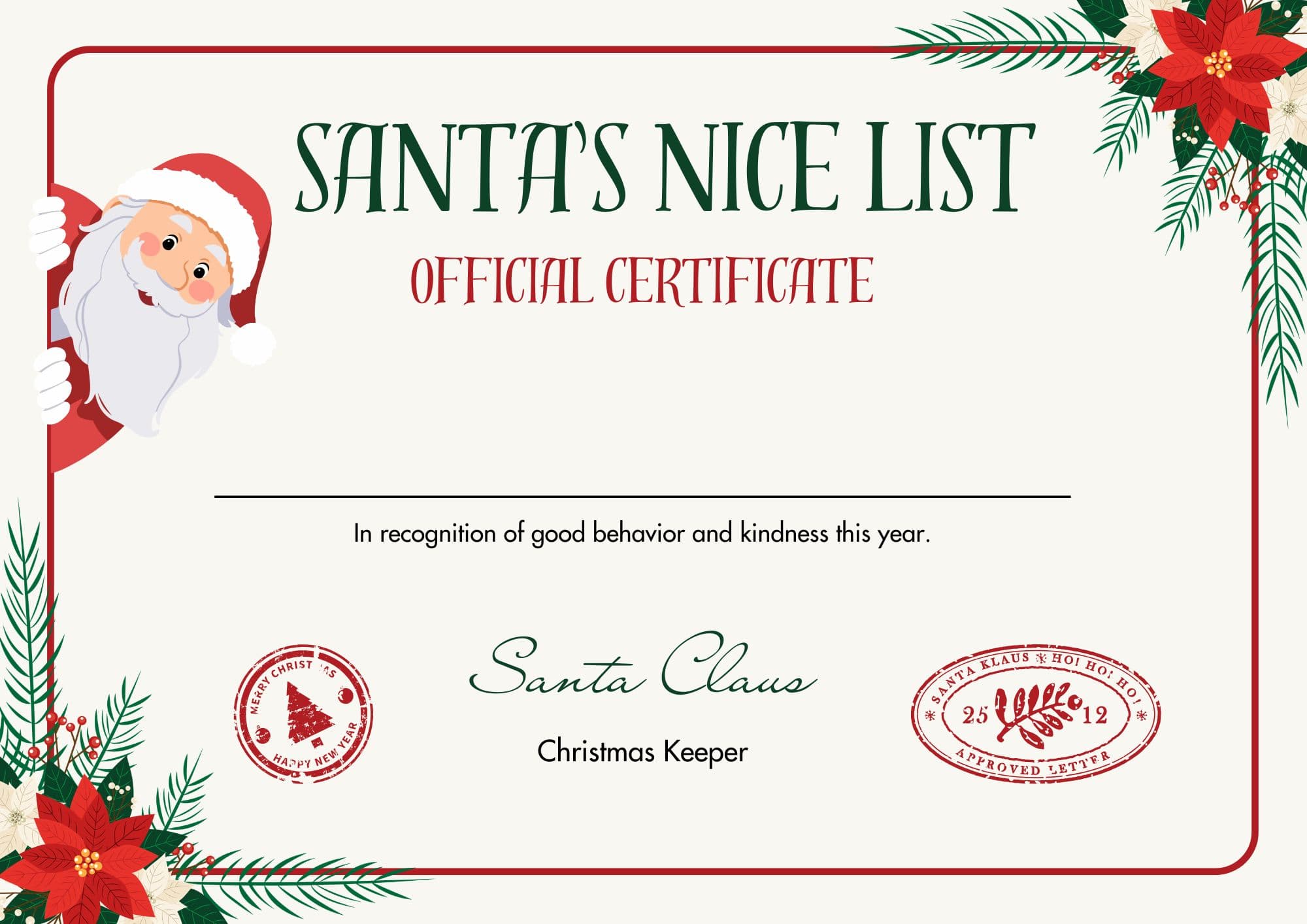
Printable Letter From Santa + Nice List Certificate
Two beautiful keepsakes from the North Pole — a personalized-style letter from Santa and an official Nice List certificate. Enter your email and Santa will unlock both PDFs for you, free.

A paper letter can't say your child's name out loud
Santa can. Watch a 30-second example — he greets your child by name, city and their proudest moment of the year.
Get a video from Santa