Quick answer
- Mrs. Claus is the traditional wife and partner of Santa Claus, but her first name is not fixed across all stories.
- Her modern character developed mainly through 19th-century American Christmas poems, stories, and illustrations.
- Popular traditions portray her as a baker, organizer, animal caretaker, toy maker, teacher, and practical North Pole leader.
- Families can use Mrs. Claus facts for reading activities, pretend play, letters, recipes, and conversations about kindness and teamwork.
Mrs Claus Facts: Who Is She?
Mrs. Claus is the traditional wife and partner of Santa Claus and a familiar North Pole character. Most stories describe her as Santa’s companion, household manager, baker, and trusted helper, but they do not agree on one official first name or biography. Her character became especially popular in 19th-century American Christmas writing, including James Rees’s 1849 story “A Christmas Legend.”
- Her usual role is Santa’s wife. In family stories, she supports the Christmas Eve journey while managing daily life at the North Pole.
- She has no universally accepted first name. “Mrs. Claus” is the most consistent name, while “Jessica,” “Mary,” “Anna,” and other names appear in modern books, films, and family retellings.
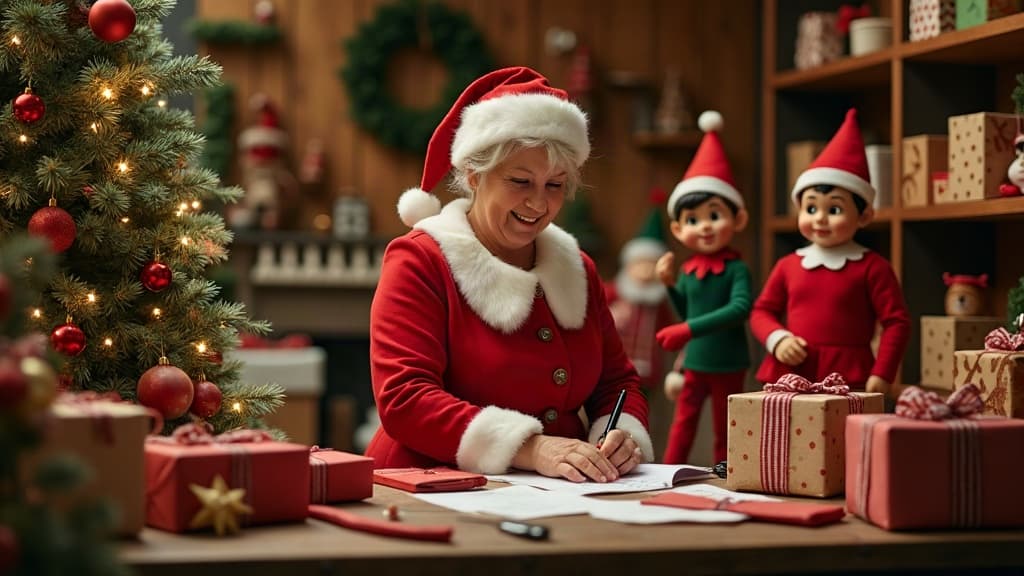
- She is often shown as an older woman with silver or white hair, glasses, a red dress, and a white apron. Artists change the details from one version to another.
- Her character is usually associated with kindness, patience, practical wisdom, and hospitality rather than a defined set of supernatural powers.
- She is not the same figure as Saint Nicholas. Saint Nicholas was a fourth-century Christian bishop associated with Myra, an ancient city in present-day Turkey.
- She often appears in stories set at the North Pole, although Santa traditions also connect him with Lapland, Greenland, and other northern places.
- Her name is written “Mrs. Claus,” with a period after “Mrs.” in standard American English. Some titles use “Mrs Claus” without the period.
For a concise historical overview of Santa traditions, compare the Santa Claus background with your family’s favorite story. Then let children decide which Mrs. Claus details belong in their own Christmas version.
Historical Mrs Claus Facts and Her First Stories
Mrs. Claus did not arrive as a fully formed character in one ancient legend. Writers and illustrators expanded Santa’s world over time. Early references are brief, while later stories give her a home, personality, work, and relationship with Santa. These facts explain why two Christmas books may present different versions without either one being the sole authority.
- In 1823, the poem now known as “A Visit from St. Nicholas” described Santa’s sleigh and reindeer but did not include Mrs. Claus. The poem is commonly attributed to Clement Clarke Moore, although its publication history has been debated.
- In 1849, James Rees published “A Christmas Legend,” one of the early American stories to mention Santa’s wife. Her brief appearance helped establish the idea of a Mrs. Santa figure.
- In 1889, Katherine Lee Bates published the poem “Goody Santa Claus on a Sleigh Ride.” It gave Mrs. Claus a stronger voice and showed her taking part in Santa’s Christmas work.
- The word “goody” was an old-fashioned respectful form of address for a married woman. “Goody Santa Claus” therefore means something close to “Mrs. Santa Claus.”
- Thomas Nast’s 19th-century Santa illustrations helped popularize a detailed North Pole setting. His drawings appeared in Harper’s Weekly and influenced later Christmas imagery.
- Victorian Christmas culture often emphasized home, hospitality, children, food, and family celebrations. Those themes shaped the warm domestic image later connected with Mrs. Claus.
- Modern stories frequently make her an equal partner instead of a background character. She may plan deliveries, solve problems, teach elves, or lead her own Christmas mission.
The Library of Congress collection is a useful place to explore historic American Christmas materials, including 19th-century publications and illustrations. When sharing history with children, describe older versions as changing traditions rather than one official answer.
Make it magical with a video from Santa
Santa says your child's name, city and proudest achievement — in a real personalized video. Watch a free preview in 60 seconds.
What Does Mrs. Claus Do at the North Pole?
Popular stories give Mrs. Claus many practical jobs. Her work usually complements Santa’s public role, but it should not be reduced to waiting at home. A strong modern version presents her as an active leader with skills that keep the North Pole organized, welcoming, and ready for Christmas Eve.
- She plans meals for a very busy household. A child-friendly menu might include oatmeal, vegetable soup, gingerbread, hot cocoa, and warm apple cider.
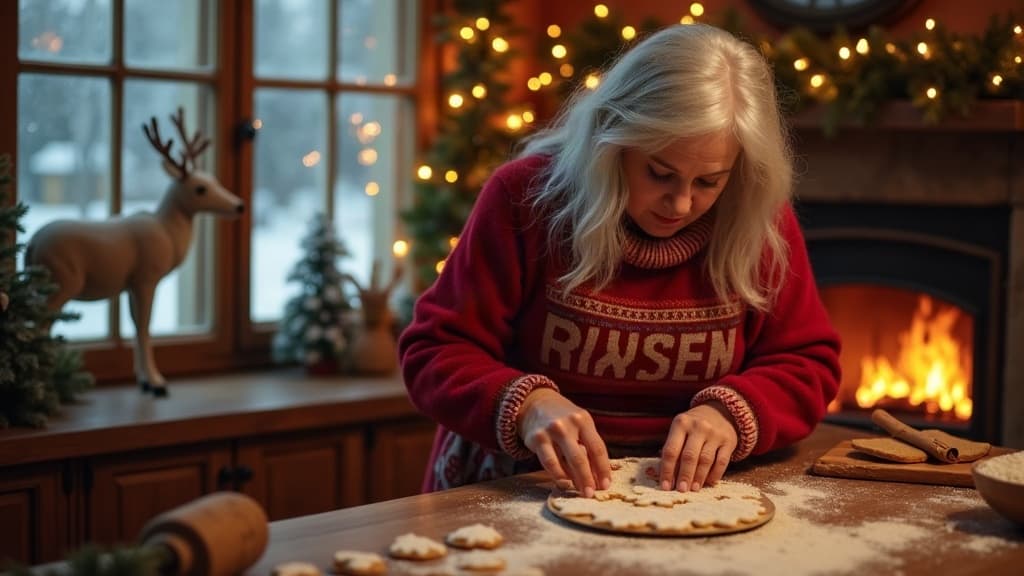
- She bakes cookies for Santa, elves, reindeer, visitors, and neighbors. Gingerbread cookies are especially common because gingerbread has a long connection with European Christmas baking.
- She checks gift lists and helps organize packages by destination. Families can copy this idea by sorting presents into piles for each person.
- She cares for reindeer when Santa is away. Stories may show her preparing oats, carrots, apples, water, blankets, or hoof-care supplies.
- She repairs clothing and winter gear. A sewing basket, red thread, wool socks, and a basket of mittens make an easy pretend-play setup.
- She welcomes visiting elves, children, and community members. Her kitchen is often portrayed as the warmest room in the North Pole home.
- She teaches useful skills, such as baking, wrapping, mending, reading maps, and caring for animals.
- She encourages Santa to rest and eat. Even magical workers need meals, sleep, and teamwork.
- She may oversee a workshop, library, garden, or greenhouse. These settings show that Christmas preparation involves more than toy making.
- She keeps family traditions alive through songs, recipes, decorations, and storytelling. Parents can invite children to name one tradition they would bring to her kitchen.
A simple family activity is to make a North Pole job chart with five columns: baking, animals, gifts, repairs, and kindness. Children can add one task under each heading, then write a short letter from Santa that mentions their favorite Mrs. Claus job.
Mrs Claus Facts About Her Personality and Relationships
Mrs. Claus stories work best when her personality feels specific. She can be gentle without being passive, organized without being stern, and funny without becoming a joke. These details give children a richer character to imagine and give parents useful conversation prompts.
- She is often portrayed as calm under pressure. If a reindeer loses a bell or a package is misplaced, she helps solve the problem step by step.
- She represents hospitality. Her signature action may be offering soup, tea, cocoa, cookies, or a warm seat to someone who arrives cold.
- She can be adventurous. In many modern retellings, she travels, leads a rescue, visits children, or takes charge while Santa is unavailable.
- She is a partner, not merely an assistant. A balanced story gives her decisions, opinions, expertise, and moments when Santa depends on her.
- She may have a playful sense of humor. A flour-covered apron, a runaway pudding, or a reindeer eating the wrong ribbon can create gentle comedy.
- She values kindness with boundaries. She can encourage generosity while also reminding characters to clean up, tell the truth, or care for tired animals.
- She is often connected with storytelling. Ask children what tale she might read on December 24 and why that story would matter.
- She may have a close friendship with the elves. This relationship can show cooperation, teaching, disagreement, and repair after mistakes.
- She is frequently shown as a grandmotherly figure, but that is not required. Families can imagine her as young, old, or ageless.
- Her relationship with Santa can include shared rituals, such as tasting the first cookie batch, checking the weather, or watching the first star appear.
To build a child’s own version, ask three questions: What is Mrs. Claus best at? What makes her laugh? What problem would she solve before Christmas Eve? The answers create a character with more depth than a costume alone.
Fun Mrs Claus Facts for Kids and Family Activities
Mrs. Claus facts become memorable when children can use them. These activities work for preschoolers, elementary-age children, and mixed-age siblings. Keep the focus on imagination, kindness, and family participation rather than perfect crafts or complicated preparation.
- Create a Mrs. Claus recipe card. Write ingredients for gingerbread, oatmeal cookies, or apple muffins, then add one imaginary North Pole ingredient such as moon-sugar or reindeer-safe cinnamon.
- Make a North Pole household map. Draw the kitchen, reindeer barn, workshop, library, garden, sleigh shed, and Mrs. Claus’s favorite reading chair.
- Hold a five-minute kindness meeting. Each family member names one helpful action Mrs. Claus might notice, such as feeding a pet or including a lonely classmate.
- Design her apron. Use paper, crayons, and stickers to add pockets for cookie cutters, ribbon, a tiny notebook, or a star-shaped key.
- Write a one-page interview. Children can ask, “What is your busiest day?” “What do you cook first?” and “What does Santa forget?”
- Build a pretend reindeer-care station with a bowl, brush, blanket, and labeled care list. Use stuffed animals instead of real animals for safe play.
- Start a December countdown with one Mrs. Claus task per day, such as reading a story, donating a book, baking, or calling a relative. A family Christmas countdown can keep those small rituals visible.
- Create a “Mrs. Claus says thank you” jar. Add notes about helpful behavior and read them together on Christmas Eve.
- Plan a North Pole breakfast with oatmeal, berries, toast, and warm cider. Let children set the table with handmade place cards.
- Record a family story in which Mrs. Claus solves a problem using patience, teamwork, and one ordinary household object.
For younger children, choose one activity and finish it in 15 minutes. Older children can combine the map, recipe, and interview into a small North Pole scrapbook that becomes a family keepsake.
Mrs Claus Name Ideas, Traditions, and Story Choices
Because tradition does not provide one universal first name, families can choose a name that fits their story. The key is consistency. If one child hears “Jessica” in a book and another hears “Mary” in a family tale, explain that different writers create different versions of the same legendary character.
- Use “Mrs. Claus” when you want the most widely recognized and tradition-friendly option. It is clear, familiar, and easy for young children to remember.
- Use “Jessica Claus” if your family enjoys modern popular storytelling. Explain that Jessica is one fictional name used in contemporary entertainment, not a historical fact.
- Use “Mary Claus” for a classic, gentle family story. Mary connects naturally with familiar Christmas names without claiming it is official.
- Use “Anna Claus” for a Scandinavian-inspired household tale. Pair it with northern lights, wool sweaters, rye bread, and berry preserves.
- Let children invent a first name, then write three character facts that stay the same every time they tell the story.
- Choose a regional food tradition. A family in Pennsylvania might serve shoofly pie, while a family with Scandinavian roots might include lussekatter, saffron buns associated with Saint Lucia celebrations.
- Compare Santa traditions from different places. Saint Nicholas Day is celebrated on December 6 in many European communities, while Christmas gift traditions vary by country and family.
- Give Mrs. Claus a personal tradition, such as lighting a candle, planting a winter herb garden, or reading a specific poem before Santa leaves.
- Decide whether she travels on Christmas Eve. She might ride with Santa, visit hospitals, stay with the animals, or deliver kindness notes in a separate sleigh.
- Write a family rule for storytelling: label invented details as “our version” and historical details as “a tradition some people tell.”
This approach avoids arguments about the “correct” version. It also respects the fact that Christmas folklore changes across decades, languages, regions, books, performances, and family customs.
Mrs Claus Facts Parents Can Use in Santa Conversations
Parents often search for Mrs. Claus facts because a child has asked a specific question: Where does she sleep? Does she fly? Does she have a job? A short, confident answer works best. Give the traditional answer first, then invite the child to add an idea.
- If asked whether Mrs. Claus is real, say that she is a beloved Christmas character who appears in stories, songs, performances, and family traditions. Then ask what your child imagines about her.
- If asked for her first name, explain that stories use different names and no single first name is official. Let the child choose one for your family’s version.
- If asked whether she makes all the toys, say that stories usually show a team of elves and helpers. Mrs. Claus may organize, design, repair, or inspect gifts.
- If asked why she does not deliver every present, explain that different stories give her different jobs. She may travel, manage the North Pole, or visit people who need extra comfort.
- If asked whether she has magic, say that many stories give her Christmas magic, while others show her using ordinary skills such as planning, baking, sewing, and caring.
- If asked what she eats, offer familiar possibilities: gingerbread, oatmeal, soup, roasted vegetables, fruitcake, mince pies, cookies, cocoa, and cider.
- If asked where she lives, say that the best-known stories place her with Santa near the North Pole, while some traditions connect Santa with Lapland or other northern regions.
- If asked whether she works on Christmas Eve, describe the teamwork: checking supplies, caring for animals, encouraging Santa, and helping the whole operation run smoothly.
- If a child wants proof, focus on meaningful rituals rather than pretending every detail is historical. A family story, recipe, or recorded greeting can preserve the magic.
- If a child is anxious about Santa, make Mrs. Claus a reassuring presence. Describe her as someone who checks that children are safe, warm, and cared for.
A personalized video from Santa can include a specific Mrs. Claus detail, such as her favorite cookie or a reminder to leave water for the reindeer. Keep the message suited to your child’s interests and avoid promises that create pressure.
Free download
Printable Letter From Santa + Nice List Certificate
Two beautiful keepsakes from the North Pole — a personalized-style letter from Santa and an official Nice List certificate. Enter your email and Santa will unlock both PDFs for you, free.
A paper letter can't say your child's name out loud
Santa can. Watch a 30-second example — he greets your child by name, city and their proudest moment of the year.
Get a video from Santa