Quick answer
- Santa is a beloved Christmas tradition inspired partly by Saint Nicholas, a fourth-century bishop known for generosity.
- Santa’s worldwide journey is make-believe, so families can explain it with imagination, stories, and Christmas traditions.
- When children ask whether Santa is real, answer honestly while preserving the values of kindness, generosity, and wonder.
- Different families celebrate Santa in different ways, and there is no single correct tradition.
Questions Kids Ask About Santa Answered: The Short Version
Questions kids ask about Santa answered simply: Santa is a beloved Christmas story inspired in part by Saint Nicholas, a real fourth-century bishop remembered for secretly helping people in need. Families keep the tradition alive through make-believe, gift-giving, kindness, and shared stories, so children can enjoy Santa in a way that fits their family’s beliefs.
Children usually ask about Santa when they are building a clearer picture of the world. A preschooler may accept a story about a flying sleigh without much concern. A six-year-old may want details about reindeer food, chimney sizes, or how Santa knows which present belongs to whom. An eight-year-old may compare clues with friends. These questions are not a test you must pass. They are invitations to talk about imagination, generosity, family traditions, and growing up.
A helpful answer pattern
- Start with curiosity: “That is a thoughtful question. What do you think?”
- Give a short answer that matches your child’s age and the family’s tradition.
- Add a value: “Santa stories remind us to give quietly and make people feel cared for.”
- Avoid promising details you cannot comfortably maintain later.
- Let your child enjoy uncertainty if they are still delighted by the story.
If your family treats Santa as a pretend character, say so warmly. If you present Santa as a special Christmas mystery, use language that leaves room for wonder. The goal is not to win an argument or produce a flawless explanation. It is to help your child feel secure, respected, and included in the celebration.
Who Is Santa, and Where Did the Story Begin?
The Santa story has several historical and cultural roots. One important figure is Nicholas of Myra, a Christian bishop who lived during the fourth century in the town of Myra, in present-day Demre, Türkiye. Stories about Nicholas describe generous gifts and secret acts of charity. His feast day, December 6, became associated with gift-giving in parts of Europe. You can read a concise historical overview in the Saint Nicholas article.
The modern American Santa developed over many years. In 1823, the poem “A Visit from St. Nicholas,” commonly called “’Twas the Night Before Christmas,” helped popularize a cheerful visitor who arrived by sleigh with reindeer. The poem is traditionally attributed to Clement Clarke Moore, although its authorship has also been debated. Later illustrations, stories, and advertising helped shape the familiar red-suited figure seen in many American homes today.
A child-friendly explanation
You might say, “Santa is a Christmas character based partly on a real person named Nicholas, who was known for helping others. Over time, families added stories about sleighs, reindeer, elves, and a workshop. Today, Santa represents generosity and the fun of giving.” This answer is accurate without burying a young child in history.
- Saint Nicholas: a historical bishop associated with generosity and secret gifts.
- December 6: Saint Nicholas Day in several European traditions.
- 1823: publication of the famous American Santa poem.
- Modern Santa: a blend of history, folklore, literature, art, and family customs.
Children may also ask why Santa looks different around the world. Explain that traditions reflect local culture. In Italy, La Befana is a gift-bringing figure. In parts of Central Europe, Saint Nicholas may arrive with an angelic companion. In the Netherlands, Sinterklaas traditionally arrives before December 25, often on December 5 or 6. These differences do not make one tradition wrong; they show how families have adapted Christmas stories over time.
Make it magical with a video from Santa
Santa says your child's name, city and proudest achievement — in a real personalized video. Watch a free preview in 60 seconds.
How Does Santa Visit Every House in One Night?
This is one of the most common questions kids ask about Santa. A playful answer is that Santa travels during the night, follows different time zones, and receives help from families who prepare gifts ahead of time. You can also say that Santa’s journey belongs to the story, so it does not need to follow ordinary travel rules. Keep the explanation flexible instead of inventing complicated measurements your child may later challenge.
Answers for different ages
- Ages three to five: “Santa has a special sleigh, speedy reindeer, and helpers all over the world.”
- Ages six to seven: “Santa visits while people sleep, and Christmas happens at different times around the world.”
- Ages eight and older: “The Santa story uses imagination to describe something real families do: quietly create joy for one another.”
Questions about the chimney often need a practical answer. You can say, “Santa does not need a real chimney in every home. In stories, the chimney is a symbol of how he gets inside. In our house, grown-ups make sure everything is safe.” This avoids encouraging unsafe behavior, such as climbing on roofs, squeezing into a fireplace, or trying to enter a chimney.
For a child who wants evidence, invite imaginative problem-solving. Ask, “If Santa had to visit every time zone, what route would you plan?” Draw a map and mark places such as New York, London, Tokyo, and Sydney. The activity turns a difficult question into geography practice without pretending that a storybook journey can be measured like a normal flight. Older children might calculate time differences, while younger ones can simply draw reindeer routes across the map.
If your family sends a message to Santa, keep it personal and calm. A letter from Santa can focus on effort, kindness, reading, helping, or family memories rather than surveillance. Children generally respond better to encouragement than to the idea that every small mistake is being permanently recorded. A note that says, “I heard you helped clear the table,” feels more caring than one that lists every behavior an adult has been tracking.
What Do Santa’s Reindeer, Elves, and Workshop Do?
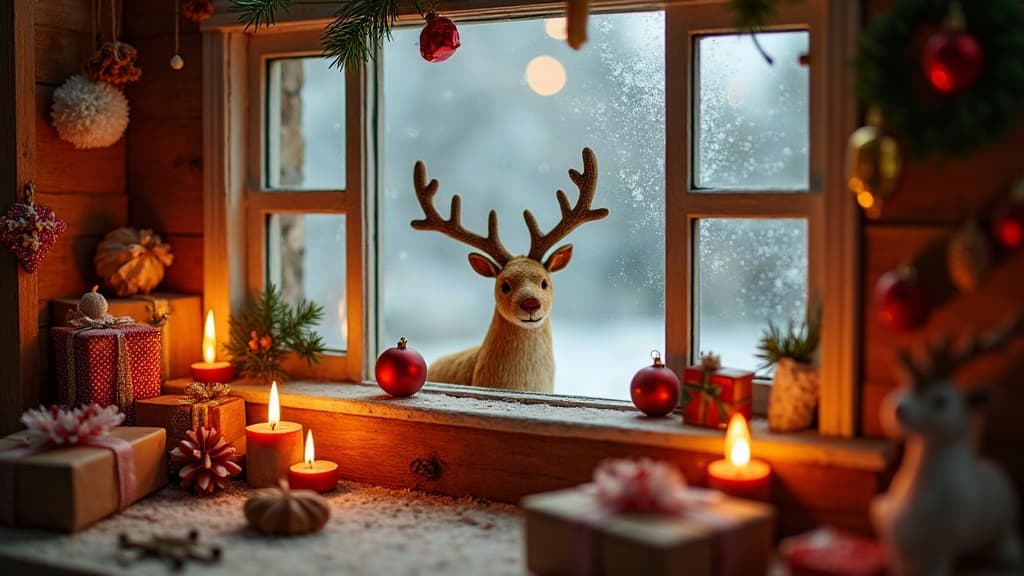
Children often ask for the details that make Santa’s world feel real. The best answers give them a few concrete images while leaving space for their own ideas. The reindeer pull the sleigh in the traditional story, and Rudolph became famous through a 1939 booklet created for Montgomery Ward by Robert L. May. Rudolph was later featured in the popular 1949 song written by Johnny Marks.
The original 1823 Santa poem named Dasher, Dancer, Prancer, Vixen, Comet, Cupid, Donder, and Blitzen. “Rudolph” was added later, so you can explain that Santa stories have grown over time. Children often enjoy discovering that traditions are not frozen. New songs, books, family jokes, and customs can become part of the story too. If a child points out that different books name different helpers, that is a chance to explain that folklore changes as people retell it.
Fun questions and sensible answers
- What do reindeer eat? “They need hay, grain, carrots, apples, and plenty of water. In our story, they may enjoy special Christmas treats too.”
- What do elves make? “Different stories say different things. They may prepare toys, repair sleigh equipment, bake treats, or organize gifts.”
- Does Santa have a pet? “Some families imagine reindeer, polar bears, Arctic foxes, or friendly workshop animals. You can choose what belongs in our story.”
- What does Santa eat? “Many families leave cookies and milk. Other traditions include mince pies, gingerbread, fruit, or rice porridge.”
Avoid presenting one invented detail as a universal rule. Santa folklore changes by country and household. A child who hears that Santa always eats cookies may be confused when a friend leaves clementines, mince pie, hot cocoa, or nothing at all. Saying “In our family” is both accurate and welcoming. It also gives children permission to notice differences without declaring another family’s celebration incorrect.
How to Answer “Is Santa Real?” Without Losing Trust
When a child asks, “Is Santa real?”, pause before answering. The question may mean “Can I still enjoy this story?”, “Did adults trick me?”, or “Am I ready to know more?” Ask what they have heard and what they think first. Then give an honest answer that matches your family’s beliefs. Trust grows when children feel that their questions receive respect rather than ridicule.
Three gentle approaches
- Tradition approach: “Santa is a special Christmas tradition. Families tell the story and adults help create the wonder.”
- Historical approach: “The Santa story is connected to Saint Nicholas, a real person remembered for generosity. The flying sleigh and workshop are imaginative parts of the story.”
- Family-mystery approach: “Santa is real in the way love, generosity, and Christmas wonder are real. Grown-ups help carry the tradition.”
If your child says, “I know Santa is you,” do not force a denial. You can smile and say, “You are noticing many clues. What do you think happens in our home?” If they seem ready, explain that adults often act as Santa’s helpers. Then invite them to help create joy for younger children or relatives, while respecting anyone who still enjoys believing. A child may help wrap a cousin’s gift, choose a food-bank donation, or leave a kind note without being asked to announce what they now know.
It also helps to separate Santa from behavior control. Avoid saying that Santa will withhold love or gifts because of ordinary childhood mistakes. Children need boundaries, but Christmas should not make them feel watched or judged. A more constructive message is, “We all practice kindness, repair mistakes, and help when we can. Santa stories celebrate those choices.” Gifts should not become a scorecard for a child’s worth.
For children who want continuing contact with the story, a chat with Santa can become a playful conversation about kindness, family traditions, and holiday questions. Keep the experience age-appropriate and let your child lead the discussion. Do not use it to collect confessions, pressure a child into belief, or make promises your family cannot keep.
Practical Tips for Handling More Santa Questions
Santa questions often arrive at inconvenient moments: in a grocery aisle, during a school pickup, or just after a sibling announces a strong opinion. You do not need a perfect answer immediately. Say, “That is a big question. Let’s talk about it when we get home.” A calm pause gives you time to understand what your child actually wants to know. It also prevents a rushed answer from turning a small question into a family argument.
Keep the conversation warm and specific
- Use your family’s language consistently. Decide whether Santa “brings,” “helps choose,” or “represents” gifts.
- Coordinate with relatives before Christmas Eve. Ask them not to reveal details or contradict your household story.
- Protect privacy. Do not tell children that Santa knows private thoughts, bathroom behavior, or every mistake.
- Prepare for school differences. Tell children that families explain Santa in different ways and that they should not spoil another child’s fun.
- Name the feeling behind the question. “It sounds like you are worried that the story might change.”
- Offer a family ritual, such as reading a book, leaving a carrot for the reindeer, or writing a thankful note.
A personalized video from Santa can answer a child’s harmless question using familiar details, such as a sibling’s name, a favorite hobby, or a goal they are working toward. Use it as one part of the celebration, not as proof that a child must accept a particular belief. The most lasting memories usually come from the conversation afterward: the questions, laughter, and time spent together. A short video followed by cocoa and a family story can feel more personal than a long performance packed with claims.
Finally, remember that belief changes gradually. A child may believe one year, investigate the next, and still enjoy Santa stories later. That is normal. The tradition can mature from a literal visitor into a shared family language for generosity, surprise, and care. What matters most is not keeping every detail secret forever. It is showing children that Christmas can make room for honesty, imagination, cultural differences, and thoughtful giving.
Free download
Printable Letter From Santa + Nice List Certificate
Two beautiful keepsakes from the North Pole — a personalized-style letter from Santa and an official Nice List certificate. Enter your email and Santa will unlock both PDFs for you, free.
A paper letter can't say your child's name out loud
Santa can. Watch a 30-second example — he greets your child by name, city and their proudest moment of the year.
Get a video from Santa