Quick answer
- Santa traditionally lives at the North Pole.
- His imagined home includes a snowy village, toy workshop, reindeer stables, and rooms for sorting letters and gifts.
- The geographic North Pole is real, but Santa's exact house belongs to Christmas folklore.
- Families can use Santa's home to talk about kindness, preparation, imagination, and giving.
Where Does Santa Live? The Short Answer
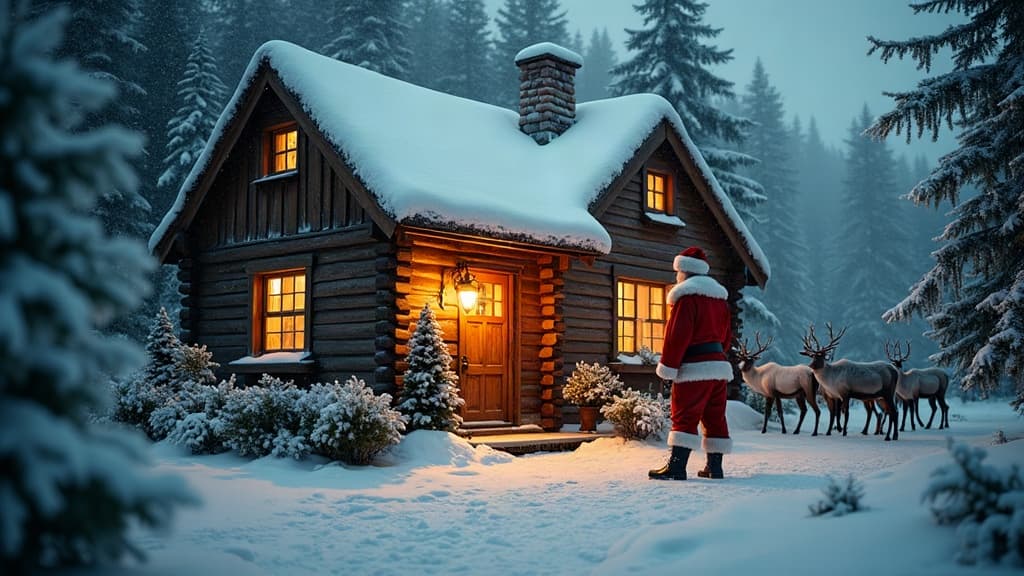
Santa Claus traditionally lives at the North Pole, a snowy setting in the Arctic. Christmas stories often describe his home as a working village with a toy workshop, reindeer stables, a kitchen, and a comfortable house where Santa and Mrs. Claus prepare for Christmas Eve.
The North Pole suits the story because it is distant, wintry, and difficult to reach. It gives Santa a hidden base for work that continues long before December 24. In the familiar legend, elves build or organize gifts, reindeer train for the annual flight, and Santa reviews a list of children who have tried to be kind. When children ask for an address, the traditional answer is the North Pole, although no map identifies a real Santa house there.
A home built for Christmas magic
Santa's home is usually pictured as more than a small cabin buried in snow. It is a complete community organized around giving. Warm ovens turn out gingerbread and bread; lanterns light paths between buildings; sacks of letters arrive throughout the year; and shelves hold toys in different stages of repair, wrapping, and delivery. That picture helps children understand how one night of gift-giving could require months of planning.
What Is Santa's North Pole Home Like?
In family stories, Santa's North Pole home is both a residence and a workplace. His house often stands beside a large workshop, allowing him to move from family life to Christmas preparations without leaving the village. The rooms might include a letter room, a wrapping room, a map room, and a kitchen stocked with flour, cinnamon, cocoa, and warm bread.
The workshop is usually the busiest building. Elves check toys, repair loose wheels, sew torn seams, tie ribbons, print or write labels, and sort packages by destination. A nearby stable shelters the reindeer from Arctic winds. Some stories use the reindeer names from the 1823 poem A Visit from St. Nicholas: Dasher, Dancer, Prancer, Vixen, Comet, Cupid, Donder, and Blitzen.
Details children enjoy imagining
- A tall Christmas tree that stays decorated all year.
- A mailroom with letters from children in many countries.
- A reindeer barn stocked with hay, apples, oats, and carrots.
- A workshop calendar counting down to December 24.
- A kitchen where Mrs. Claus might prepare gingerbread, rice pudding, or hot chocolate.
These details are not rules every family must follow. They are pieces of a shared story. One child might add a greenhouse for winter vegetables; another might design a library, a snowy train station, or a room where Santa reads letters aloud. Asking children to add one new detail can turn a simple question into an ongoing December tradition.
Make it magical with a video from Santa
Santa says your child's name, city and proudest achievement — in a real personalized video. Watch a free preview in 60 seconds.
Why Does Santa Live at the North Pole?
Santa lives at the North Pole in popular stories because the Arctic suggests a remote, hidden place. Deep snow, long winter nights, ice, stars, and quiet skies support familiar Christmas imagery. A distant home also provides a story explanation for why families do not see Santa during the year.
The modern Santa story combines several traditions. Saint Nicholas was a Christian bishop associated with generosity who lived in the fourth century in Myra, a city in present-day Türkiye. Dutch settlers brought traditions about Sinterklaas to North America. The 1823 poem commonly called The Night Before Christmas helped popularize Santa's Christmas Eve visit and flying reindeer. Later illustrations, advertisements, books, and films added details such as the red suit, workshop, elves, and North Pole village.
A real place and a story place
There is a geographic North Pole at 90 degrees north latitude in the Arctic Ocean. It is not a town with streets, houses, or a permanent neighborhood. The pole sits on shifting sea ice rather than solid land, and the ice moves with the ocean. Santa's workshop is therefore folklore, not a confirmed building at the exact geographic pole.
Families can explain both facts without treating them as competitors. The North Pole is real geography; Santa's house is a Christmas story set against that geography. This distinction gives older children an accurate answer while leaving room for a family tradition built on imagination, generosity, and suspense.
North Pole Facts Children Often Ask About
Questions about Santa's address can lead to useful geography and science conversations. The geographic North Pole is not the same place as the town called North Pole in Alaska. Alaska's North Pole is a real community near Fairbanks, while the geographic pole lies far north in the Arctic Ocean. The Alaskan town uses Christmas-themed street names, decorations, and attractions, but it is not literally Santa's hidden workshop.
At the geographic North Pole, the Sun rises and sets roughly once each year. In simplified terms, the region experiences about six months of daylight and about six months of darkness. The transition includes long periods of twilight, and clouds, atmospheric conditions, and the Sun's apparent size make the exact experience more complicated than a simple six-month switch. Temperatures are extremely cold, and the sea ice changes position.
Fun facts for a Christmas conversation
- The geographic North Pole is at 90 degrees north latitude.
- Every line of longitude meets at the geographic North Pole.
- A compass can behave strangely near the pole because magnetic north is a different location and magnetic fields vary.
- The geographic North Pole is in the Arctic Ocean, not on the continent of Antarctica.
- Antarctica contains the South Pole region, on the opposite side of Earth.
For a young child, you might say: “The real North Pole is frozen ocean at the top of the globe. Santa's village is the storybook part—a hidden place our Christmas tradition imagines there.” Older children may enjoy looking at a globe, finding 90 degrees north, and comparing the Arctic Ocean with Antarctica.
How to Explain Where Santa Lives to Kids
Begin with the answer your family uses: “Santa lives at the North Pole, in a snowy village with his workshop and reindeer.” Then wait for the next question. Children often want to build a mental picture, so ask what they think the village contains. Their answer may tell you whether they want a quick bedtime response or a longer conversation.
Match the explanation to the child's age and curiosity. A preschooler may want a short sentence and a picture. A child in elementary school may ask how Santa gets food, reads letters, or reaches every home in one night. An older child may compare folklore with geography or ask how the story changed over time. You can answer honestly while respecting the Christmas tradition your family has chosen.
Useful answers for common questions
- “How does Santa stay warm?” Say that his house has a large fireplace, thick wool blankets, insulated rooms, and plenty of hot cocoa.
- “Where do the reindeer sleep?” Say that they have a sheltered stable with hay, apples, oats, and fresh water.
- “Why can't we visit?” Say that the workshop is hidden and especially busy in December, but children can send letters.
- “Does Santa know my address?” Say that helpers organize the letters and Santa checks his travel list carefully.
- “Is the North Pole real?” Say that the geographic North Pole is real, while Santa's village is part of the Christmas story.
A personalized letter from Santa can give a child a gentle, age-appropriate description of the workshop and reindeer. Mentioning a drawing, a favorite cookie, or a question the child asked can make the letter feel specific without requiring a complicated explanation.
Ways to Bring Santa's North Pole Home
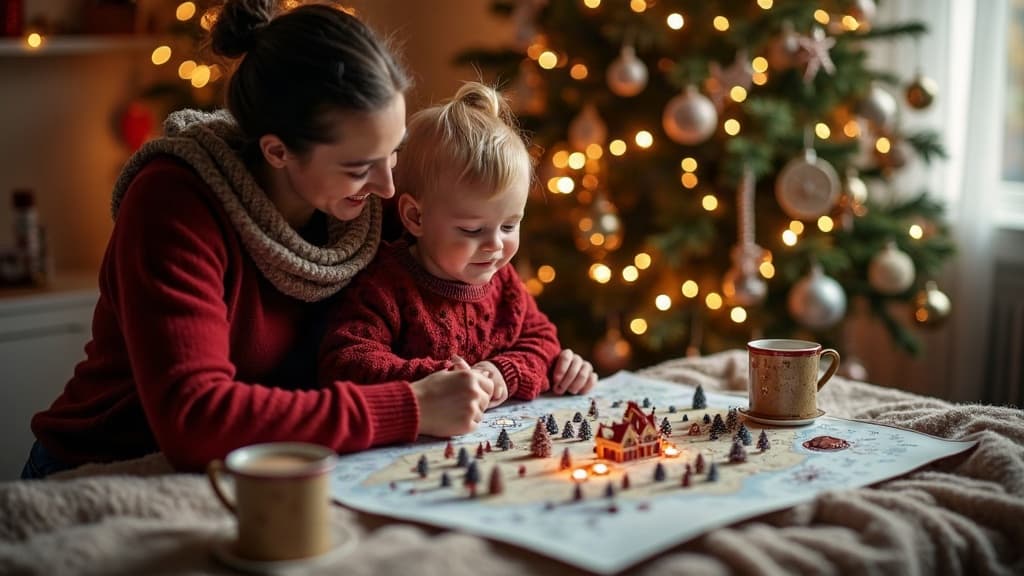
You do not need an elaborate display to make Santa's home feel present. Small sensory details do the work: place paper snowflakes near a window, leave a faint trail of flour by the cookie plate, or set a handwritten note beside a bowl of oats for the reindeer. A red mitten on a doorknob or a few boot prints in washable powder can suggest a visit. The point is to give children a story they can enter, not to create a perfect scene.
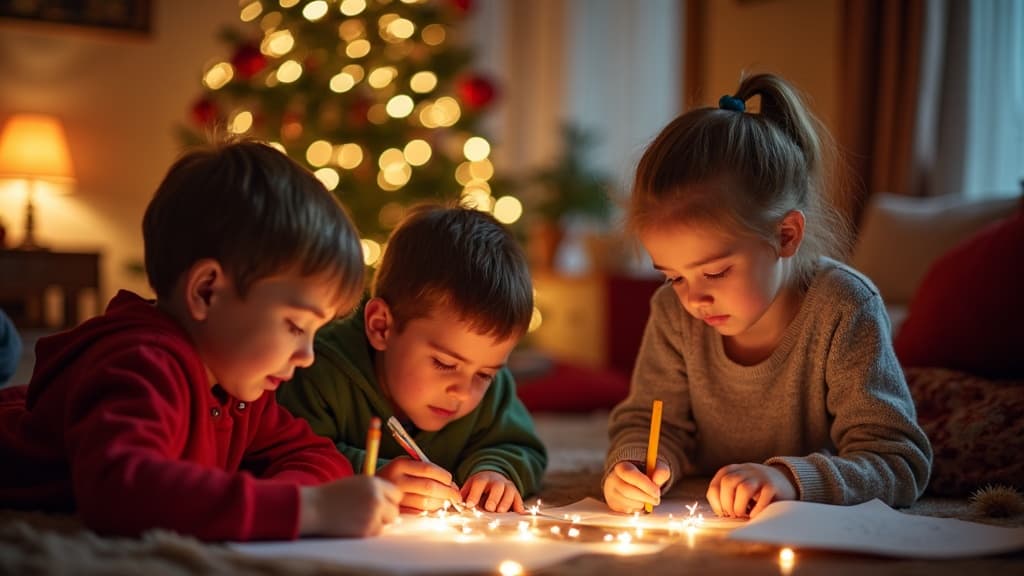
A family can create a simple North Pole routine during December. Read one Santa story at bedtime, mark December 1, December 24, and other family dates on a calendar, or choose a charitable activity that connects Santa with generosity. Children can write questions to Santa, draw a workshop map, design a delivery route, or make a reindeer menu. They might also collect unopened food for a local pantry or choose toys to donate, keeping the focus on practical kindness rather than presents alone.
Simple activities by age
- Ages 3–5: Draw Santa's house, count the reindeer, and name their colors.
- Ages 6–8: Design a workshop floor plan with rooms for letters, repairs, wrapping, and storage.
- Ages 9–12: Research Arctic geography and compare the real North Pole with Santa folklore.
- All ages: Leave carrots, oats, or apple slices and write a thank-you note.
For a personal keepsake, families can use a personalized video from Santa to mention a child's drawing, a kind action, or a question about the North Pole. An online Santa video service can add a memorable detail while parents remain in charge of the family's boundaries and traditions. A handwritten note, a recorded bedtime story, or a child-made map can create the same sense of connection without any elaborate equipment.
Free download
Printable Letter From Santa + Nice List Certificate
Two beautiful keepsakes from the North Pole — a personalized-style letter from Santa and an official Nice List certificate. Enter your email and Santa will unlock both PDFs for you, free.
A paper letter can't say your child's name out loud
Santa can. Watch a 30-second example — he greets your child by name, city and their proudest moment of the year.
Get a video from Santa