Quick answer
- Germany has two gift-bringers: the Christkind and the Weihnachtsmann.
- The Christkind is religious in origin; the Weihnachtsmann comes from popular culture.
- Which one visits depends on the region and on family tradition.
- Both arrive on Christmas Eve, not on Christmas morning.
- Children handle the two-figure story fine once you explain it as regional, not as a contradiction.
What is the difference between the Christkind and the Weihnachtsmann?
The Weihnachtsmann is the figure most of the world would recognise instantly: bearded, red-suited, essentially Santa Claus by another name. The Christkind is something else entirely — an angelic child figure with religious roots and a much more local following. Both deliver presents on Christmas Eve in Germany, and which one turns up at your door depends almost entirely on where in the country you are. The story of Christkind goes back further than most families realize.
Where each one arrives
Northern Germany belongs largely to the Weihnachtsmann, as do most English-speaking countries. The image is the familiar one, and it was shaped heavily by twentieth-century advertising — Coca-Cola's campaigns in particular fixed the red suit in the popular imagination. Southern Germany, especially Bavaria and Baden-Württemberg, keeps the Christkind: a luminous child, usually depicted with blond hair and wings, who leaves the presents under the tree and is never actually seen doing it.
Where they came from
The Christkind is the older idea in this pairing, and it began as a piece of religious reform. In the sixteenth century Martin Luther promoted the Christ Child as the gift-bringer in place of Saint Nicholas, moving the focus of the celebration away from a Catholic saint and onto the birth of Christ. The irony is that the Christkind is now strongest in Catholic southern Germany and Austria, while Protestant regions largely adopted the Weihnachtsmann — a secular figure who evolved out of Saint Nicholas anyway, by way of Dutch settlers, American poetry and eventually advertising.
Why both figures still matter at Christmas
Neither figure is only about presents. Both carry the part of Christmas that is about giving rather than receiving, and both give families a shared story that survives across generations. That continuity is most of the point: children who grow up with the Christkind usually raise their own children with it, and the same is true of the Weihnachtsmann.
What each one stands for
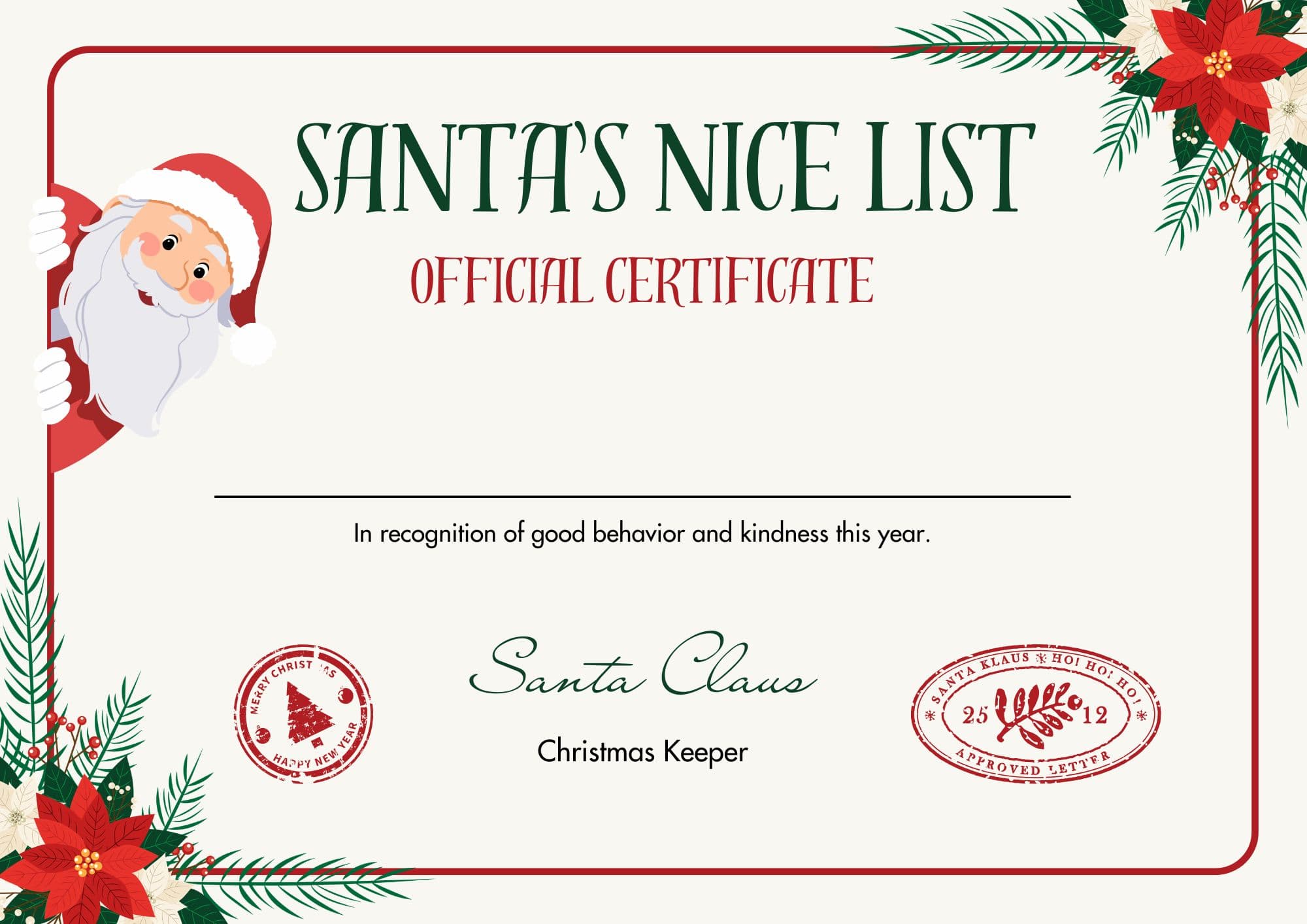
The Christkind keeps the religious thread visible — it points directly at the nativity and carries associations of purity and quiet. The Weihnachtsmann carries the secular version of the same values: generosity, warmth, and the pleasure of giving something to someone. Children take the same lesson from either story, which is why families who move between regions rarely find the switch difficult. Some households keep a nice list certificate as a small ritual regardless of which figure they follow.
Tradition and belonging
The rituals around each figure are often more memorable than the presents themselves: the bell that rings to signal the Christkind has been, the tree that stays behind closed doors until Christmas Eve, the letters left out in advance. These are the details children remember decades later, and they are the reason the two traditions have stayed distinct instead of merging into one.
Make it magical with a video from Santa
Santa says your child's name, city and proudest achievement — in a real personalized video. Watch a free preview in 60 seconds.
Things you probably didn't know about either figure
The Christkind was invented to replace Saint Nicholas and ended up coexisting with his descendant instead. The Weihnachtsmann's red suit was standardised by soft-drink advertising. And in both traditions the gift-bringer is never seen — which is a deliberate part of the story, not an oversight.
- Santa Claus has an official residence in Rovaniemi, Finnish Lapland, which receives letters from children all over the world and is open to visitors year-round.
- At the Nuremberg Christkindlesmarkt the Christkind is played by a young woman in a white and gold robe with a crown, chosen every two years — the market itself is named after the figure.
- In Germany the presents arrive on Christmas Eve, 24 December, not on Christmas morning, and are usually opened after dinner.
- Saint Nicholas has not disappeared from either region: he comes separately on 6 December and fills boots left outside the door.
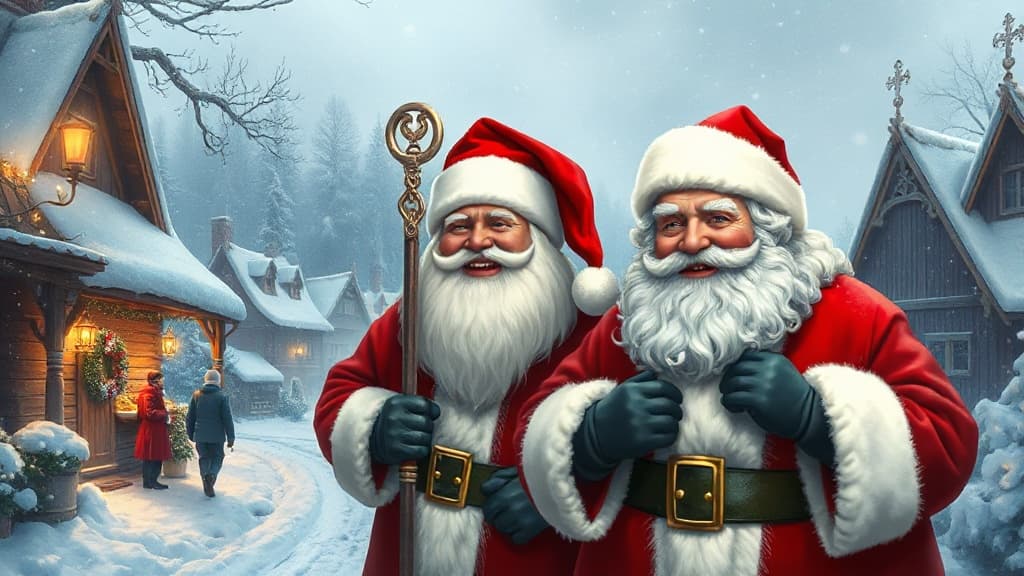
How to explain the difference to children
The version that works is the honest one: different places have different Christmas stories, and neither is a mistake. Children handle that easily — it's the same logic as different families having different birthday traditions. Problems only appear when adults present it as a contradiction that needs resolving.
Tell it as a story
Picture books and read-aloud stories do most of the work here. One story can show the Christkind as a messenger arriving unseen; another can follow the Weihnachtsmann across the world in a single night. Writing to either one makes it concrete — a letter from Santa works just as well when the figure at the other end is the Christkind, since both are answering the same child.
Let them ask questions directly
Children ask better questions than adults expect, and the answers land harder when they come from the figure rather than from a parent. Chatting with Santa gives them somewhere to put those questions, and for families who mark the day with something more personal, a message that names the child and mentions what they actually did this year tends to be the part they remember.
Regional differences across Germany and Europe
Inside Germany the split runs roughly north-south. Bavaria and Baden-Württemberg are Christkind country, along with Austria and parts of Switzerland; northern and eastern regions lean to the Weihnachtsmann. The border is not clean — plenty of families in the south have switched over the last two generations, and mixed households simply run both.
The rest of Europe
Almost every country has its own arrangement. France has Père Noël, Britain has Father Christmas, and Italy has both Babbo Natale and La Befana, the witch who brings gifts on 6 January. Spain and much of Latin America keep the main gift day for the Three Kings on the same date, and Poland celebrates Mikołajki on 6 December in addition to Christmas Eve. Seen together, the German two-figure split stops looking unusual at all.
Why the two traditions have both survived
Neither figure has replaced the other in five hundred years of trying, which says something about what they are actually for. They are not competing brands of Christmas — they are two ways of carrying the same thing, and families keep whichever one they were given.
Passing it on
What gets handed down is rarely the theology. It's the small mechanics: who rings the bell, when the tree is revealed, whether the letter goes on the windowsill or in the post. Those details are what a child recognises later as their own Christmas, and they are the reason both the Christkind and the Weihnachtsmann are still here.
Free download
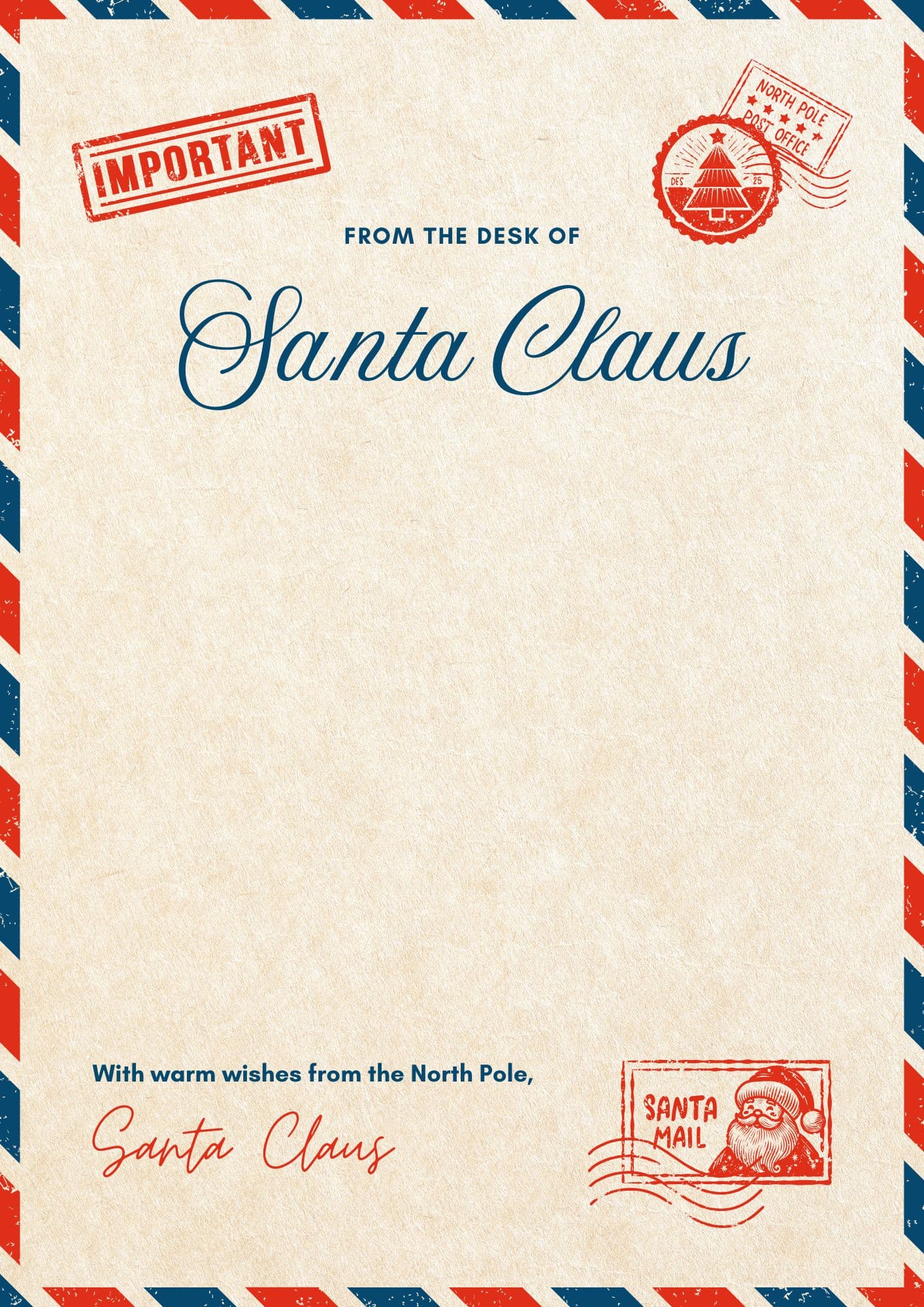
Printable Letter From Santa + Nice List Certificate
Two beautiful keepsakes from the North Pole — a personalized-style letter from Santa and an official Nice List certificate. Enter your email and Santa will unlock both PDFs for you, free.
A paper letter can't say your child's name out loud
Santa can. Watch a 30-second example — he greets your child by name, city and their proudest moment of the year.
Get a video from SantaWritten in Santa’s voice with AI help, then read and checked by a person before publishing.