Quick answer
- Mix active, quiet, competitive, and cooperative games so the party has a natural pace.
- Plan one game for every 10 to 15 minutes of party time, with a backup activity for delays or tired guests.
- Use simple supplies such as cotton balls, gift wrap, paper cups, crayons, stickers, and candy canes.
- For mixed ages, let older children read clues, demonstrate turns, or lead teams without doing every task.
- Keep a calm table activity ready for children who need time away from music, movement, or a crowded room.
Best Christmas Party Games for Kids at a Glance
A successful children’s Christmas party rarely needs complicated rules or expensive equipment. For a 60- to 90-minute gathering, choose two active games, two creative games, and one calm activity. Leave a few minutes for arrivals, snacks, bathroom breaks, and the inevitable search for a missing mitten. The ideas below suit preschoolers and elementary-age children, and most can be adjusted for a mixed group by changing the distance, time limit, or amount of help.
- Christmas Charades: Write prompts such as decorating a tree, riding in a sleigh, opening a present, feeding a reindeer, or building a snowman on paper slips. A child acts out one prompt while the team guesses within 60 seconds. For younger players, draw a small picture beside each word.
- Santa Says: Play Simon Says with holiday directions. Call out “Santa says touch your toes,” “Santa says march like an elf,” or “Santa says pretend to wrap a present.” If you give a command without the Santa cue, children should keep still. Rather than eliminating players, let anyone who moves choose the next safe action.
- Jingle Bell Toss: Place three bowls at different distances and award one, two, or three points for successful tosses. Use large bells, fabric beanbags, or soft pom-poms when younger children are playing. Mark a throwing line with painter’s tape and keep the bowls away from breakable decorations.
- Present Pass: Wrap a small prize or a stuffed holiday item in six to eight layers of paper. Pass it while music plays, and let the child holding it when the music stops remove one layer. Continue until the final layer reveals the item; several children can share the prize if the group is large.
- Christmas Color Hunt: Call out a color and give children two minutes to find a safe object in the room that matches it. Ask them to return before the next color, such as red, silver, green, or white. They may point to an object rather than pick it up, which protects the tree and table decorations.
- Snowball Scoop: Scatter cotton balls across a table or clean floor. Children use a spoon to move as many “snowballs” as possible into a cup during 30 seconds. Give each child a fresh cup and spoon, and count the cotton balls together at the end.
For a personal finale, a family can arrange a personalized Santa video that mentions the children’s names or a kind choice they made. A message about sharing toys, helping set the table, or leaving carrots for the reindeer feels more personal than a generic greeting. Play it after the final game, when the children are seated, and treat it as a shared moment rather than another competition.
Active Christmas Party Games for Kids
Active games work well after guests arrive, when coats are coming off and children need to move before sitting down for food or crafts. Clear a space away from the tree, candles, fireplaces, cords, and hot drinks before starting. Use a walking rule instead of running indoors, put chairs and cushions on stable surfaces, and keep rounds short. A two-minute round is often enough for preschoolers; older children can repeat the course or add a team challenge.
- Reindeer Relay: Divide children into teams and give each player two paper antlers or a headband. Players walk to a chair, circle it, and return before tagging the next teammate. The team that finishes first wins, but award a second point for keeping the antlers on and following the walking rule.
- Elf Delivery Dash: Place five empty boxes at one end of the room and a basket at the other. Children carry one box at a time to the basket, but they must tiptoe like elves. For a quieter version, have them balance a paper parcel on one hand and freeze whenever an adult rings a bell.
- Snowflake Freeze Dance: Play instrumental Christmas music and pause it at random. Everyone freezes in a snowflake pose; anyone who moves performs a funny two-second elf dance and rejoins. Nobody leaves the game, so a child can keep participating even after a giggle or wobble.
- Sleigh Obstacle Course: Arrange cushions, paper plates, and chairs as safe stations. Children crawl under a “bridge,” step over “snowdrifts,” and deliver a soft package to the finish line. Demonstrate the course first, and remove any station that makes the room feel cramped.
- North Pole, South Pole: Label opposite walls North Pole and South Pole. Call one location, then add “blizzard,” which means children crouch down, or “sleigh,” which means they sit and pretend to steer. Add “penguin” for a waddle when the group understands the first three commands.
- Candy Cane Hook Race: Give each child a candy cane or a reusable hook-shaped craft tool. They use it to move cotton balls from one bowl to another without touching the cotton with their hands. Use large plastic hooks for younger children and keep hard candy away from children who may put it in their mouths.
- Rudolph’s Red Nose Relay: Place a red pom-pom on a spoon. Players walk to a marker and back while keeping it balanced, then pass the spoon to the next player. If the pom-pom falls, the player simply picks it up and continues from that spot.
Avoid elimination when possible. A child who misses a step can restart, become the scorekeeper, hold the team’s picture card, or help carry supplies. This keeps preschoolers, shy children, and cautious children involved instead of watching from the sidelines. If the room is small, run one child at a time and make the challenge accuracy rather than speed.
Make it magical with a video from Santa
Santa says your child's name, city and proudest achievement — in a real personalized video. Watch a free preview in 60 seconds.
Quiet and Creative Christmas Party Games for Kids
Quiet games are useful after food, during a transition, or when several children need a calmer choice. Set up stations before guests arrive so the table is ready as soon as the music stops. Use washable markers, chunky crayons, stickers, glue sticks, and child-safe scissors. Provide one finished example and give the first instruction in a single sentence; children can ask questions as they work.
- Design a Stocking: Give each child a paper stocking outline and ask them to add a name, three decorations, and one picture of a favorite winter activity. Display the finished stockings on a wall or refrigerator. Children who finish early can make a second stocking for a stuffed animal.
- Build a Paper Christmas Tree: Provide green paper triangles, brown rectangles, and small stickers. Children arrange the pieces into a tree and add exactly five ornaments, which creates a simple counting challenge. Older children can add a star and draw presents underneath without taking over a younger child’s design.
- Holiday Story Dice: Draw six pictures on each of three paper cubes, such as Santa, a snowman, a cookie, a bell, a puppy, and a sleigh. Children roll the cubes and tell a two-sentence story using all three pictures. Let children dictate their story to an adult if writing would slow them down.
- Mystery Stocking: Place safe objects such as a pinecone, ribbon, wooden spoon, mitten, and large jingle bell inside a cloth bag. Children feel one object without looking and describe its shape before guessing. Remove anything sharp, fragile, very small, or difficult to clean.
- Christmas Card Challenge: Give each child a blank card and three required elements: a star, a snowman, and a present. Children can add their own details and give the card to a family member, neighbor, teacher, or friend. Set out name labels so adults can identify each artist’s card.
- Ornament Pattern Station: Use paper circles and stickers to create patterns such as red-green-red-green or star-dot-dot-star. Older children can invent a pattern for a younger child to copy. Add a matching game by asking children to find two paper ornaments with the same pattern.
- Santa’s Story Telephone: Whisper a short holiday sentence to the first child, such as “A tiny elf baked twelve gingerbread cookies.” Compare the final sentence with the original and laugh at the changes. Keep the sentence short enough to remember, and allow children to ask for it once more if they did not hear it.
A short Santa message can also give children a calm, memorable transition between activities. Families who want an interactive moment can try the chat with Santa experience after the craft table, while adults clean up the supplies. Put finished artwork on a separate table first; wet glue, marker caps, and loose stickers disappear quickly when cleanup begins.
Christmas Party Games for Kids Using Food and Treats
Food games feel festive, but they need clear allergy and choking-safety rules. Ask parents about allergies before serving anything, label ingredients, supervise eating activities, and use nonfood pieces for children under four. Do not make tasting compulsory; smelling, pointing, or matching picture cards can replace a bite. Traditional Christmas foods vary widely: gingerbread is associated with European holiday baking, while candy canes became a recognizable American Christmas treat during the nineteenth century. Keep snacks at a separate table from craft supplies, especially glitter, glue, and small decorations.
- Gingerbread Decorating Contest: Give each child one plain gingerbread cookie and a small set of icing and toppings. Use categories such as most colorful, funniest face, or best winter scene so several children can be recognized. Offer a plain cookie or a paper-cookie version for children with allergies.
- Marshmallow Snowman Stack: Children stack three large marshmallows and decorate them with pretzel pieces or edible eyes. Set a 90-second limit, then let each child name the snowman. Use large, age-appropriate pieces, supervise closely, and substitute paper circles when a child should not handle the food.
- Cookie Memory Tray: Arrange eight visible foods or decorations on a tray, such as a cookie, orange slice, ribbon, bell, mitten, cinnamon stick, paper star, and candy cane. Cover the tray after one minute and ask children to list as many items as they remember. Picture cards make the game accessible to children who are not reading yet.
- Candy Cane Balance: Children balance a candy cane on one finger while walking from one chair to another. Offer a paper hook or large craft hook for children who should not handle hard candy. The goal can be careful balance rather than speed, and the game works well seated at a table too.
- Taste and Guess: Use tiny portions of familiar foods such as apple, orange, cinnamon toast, or peppermint. Children smell or taste one item and record their guess with a picture or spoken answer. Check every ingredient first, and let children pass without explanation if they do not want to taste.
- Christmas Cupcake Count: Put number cards from one to ten beside undecorated cupcakes. Children add the matching number of sprinkles or paper “ornaments,” using a tray to control spills. For a no-food version, use paper cupcakes and removable stickers.
- Gingerbread Treasure Search: Hide paper pictures of gingerbread cookies around the room instead of hiding real food. Each child finds three pictures, then trades them for a snack at the table. Keep the pictures at child height and never hide them near outlets, hot drinks, stairs, or the Christmas tree.
Gingerbread houses have a long European history, and the tradition is often connected with German baking. The gingerbread house history overview offers useful background if you want to introduce the craft before a decorating game. For a party, paper houses are easier to prepare and less likely to collapse than edible structures; children can decorate them with crayons, tissue paper, and glue.
Team Christmas Party Games for Kids and Mixed Ages
Team games help children of different ages play together without making reading ability the deciding factor. Pair an older child with a younger child, give teams the same number of turns, and reward cooperation as well as speed. A simple three-point system works well: one point for completing the task, one for teamwork, and one for creativity. Avoid assigning one child to do all the reading, building, or running. Rotate roles after each round so a five-year-old can contribute as meaningfully as a ten-year-old.
- Wrap the Grown-Up: Give each team one roll of paper and a small amount of tape. Children wrap a willing adult from the shoulders down, leaving the face clear, then add a paper bow. Set a five-minute limit, keep the adult standing still, and remove the paper carefully when the round ends.
- Christmas Scavenger Hunt: Give teams a picture checklist with items such as a red mitten, a star, something soft, and something that makes music. Set a 10-minute limit and require children to leave decorations where they found them. A team may photograph an object or point to it instead of carrying it.
- Build Santa’s Chimney: Teams stack paper cups into a tower and place a red paper circle on top. Give them five minutes, then test each tower with a gentle puff of air. Award the point for staying upright, but give a second point for a team that changes its plan politely after the tower falls.
- Holiday Puzzle Exchange: Cut a large paper snowman or tree into 12 pieces for each team. Hide the pieces around one room; players may retrieve only one piece at a time before returning to the team. Use different paper colors for each team so pieces do not get mixed.
- North Pole Map: Teams draw a map from Santa’s workshop to a house, including a forest, bridge, mountain, and landing spot. One player explains the route while another traces it with a finger. Younger children can add stickers for landmarks while older children label them.
- Gift Sorting Challenge: Mix wrapped empty boxes marked with shapes, colors, or numbers. Children sort them into matching baskets, then invent a rule that another team must follow. Use lightweight boxes and keep the sorting area clear so nobody trips over the packages.
- Kindness Mission Cards: Give each team cards such as “invite someone to join,” “thank the host,” or “help return three supplies.” Teams complete the missions quietly and report what they did. Do not turn kindness into a race; the purpose is to notice helpful choices, not to collect the most cards.
Cooperative scoring is especially helpful when children do not know one another. End with a shared goal, such as collecting 20 paper snowflakes for the room, so the whole group succeeds together. If children still want a winner, name several achievements: careful listeners, creative designers, helpful teammates, and enthusiastic encouragers. Those categories give quieter children a real way to be recognized.
Classic Christmas Party Games for Kids With a Holiday Twist
Classic party formats are dependable because children understand their structure quickly. Add a holiday theme through the clues, movement, or decorations rather than changing every rule. Many Christmas customs also carry regional history; for example, Christmas crackers were created in London by confectioner Tom Smith in the 1840s and became part of British Christmas celebrations. A familiar format also helps guests who arrive late: they can watch one round and join the next without learning a long set of instructions.
- Holiday Bingo: Make cards with pictures instead of words, including a bell, star, mitten, cookie, tree, and snowflake. Call each picture clearly and let children cover spaces with paper circles. Use a full-card cooperative goal for preschoolers, or call “four corners” for a quicker round.
- Pin the Nose on Rudolph: Draw Rudolph on a poster and give each child a red paper nose with removable tape. Blindfold only children who are comfortable, and allow others to close their eyes instead. Take turns from behind a marked line, and use a large poster that will not be damaged by the tape.
- Musical Presents: Wrap several empty boxes in different paper patterns. When music stops, the child holding a box names its pattern and passes it clockwise. Change the direction after each round to keep children listening, and place no valuable or breakable objects inside the boxes.
- Christmas Pictionary: Use prompts such as chimney, stocking, candle, sled, angel, and carol. Give each artist 45 seconds and let teammates guess without shouting over one another. Picture prompts can replace written cards for younger children, while older players can draw a more difficult phrase such as “lost mitten” or “reindeer at the dentist.”
- Holiday Twenty Questions: Choose a Christmas object, such as a wreath or mitten. Children ask yes-or-no questions until someone guesses it, then the winner chooses the next object. If the group is young, reveal whether the object is worn, eaten, held, or displayed after the first few questions.
- What’s Missing From Santa’s Tray?: Arrange six objects on a tray, let children study them, and remove one while they cover their eyes. The first correct guess earns the next turn. Start with four large objects for preschoolers and increase to eight for older children.
- Carol Hum-Off: Hum the tune of a familiar carol such as “Jingle Bells” or “O Come, All Ye Faithful.” Teams have 30 seconds to identify it, with no singing words required. Children may clap the rhythm if humming feels uncomfortable, and adults should choose songs the group actually knows.
- Christmas Categories: Choose a category such as holiday foods, winter clothing, or things found on a Christmas tree. Go around the circle; a player who repeats an answer chooses a new category. For a gentler version, allow children to confer with a partner before answering.
If you use carols, remember that some songs have different copyright statuses depending on the arrangement and recording. Keep the activity informal, and choose familiar songs that the children already know. Instrumental versions work well when lyrics would make the room too loud; a small handbell or clapping pattern can also provide the musical cue without playing a full recording.
Free download
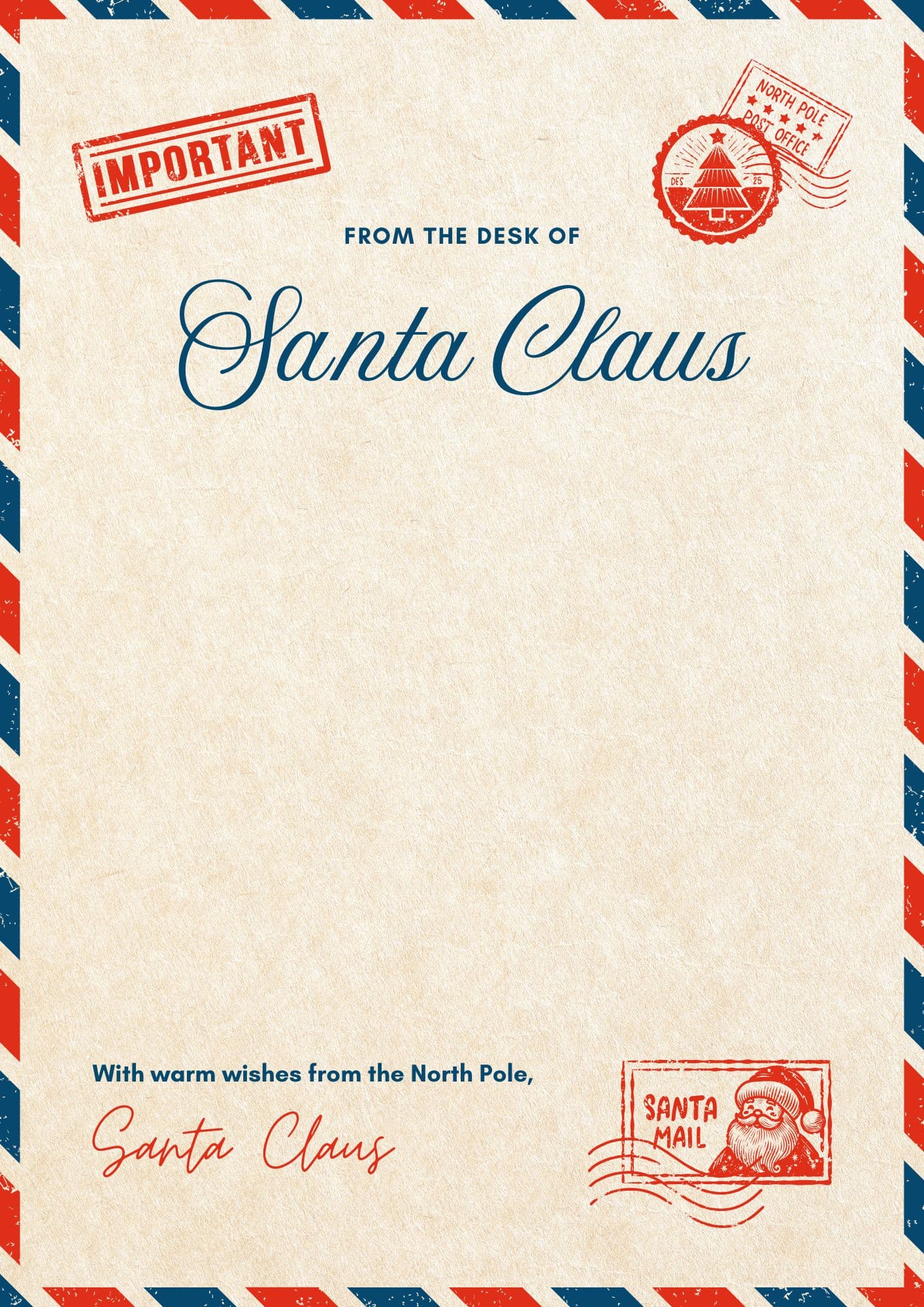
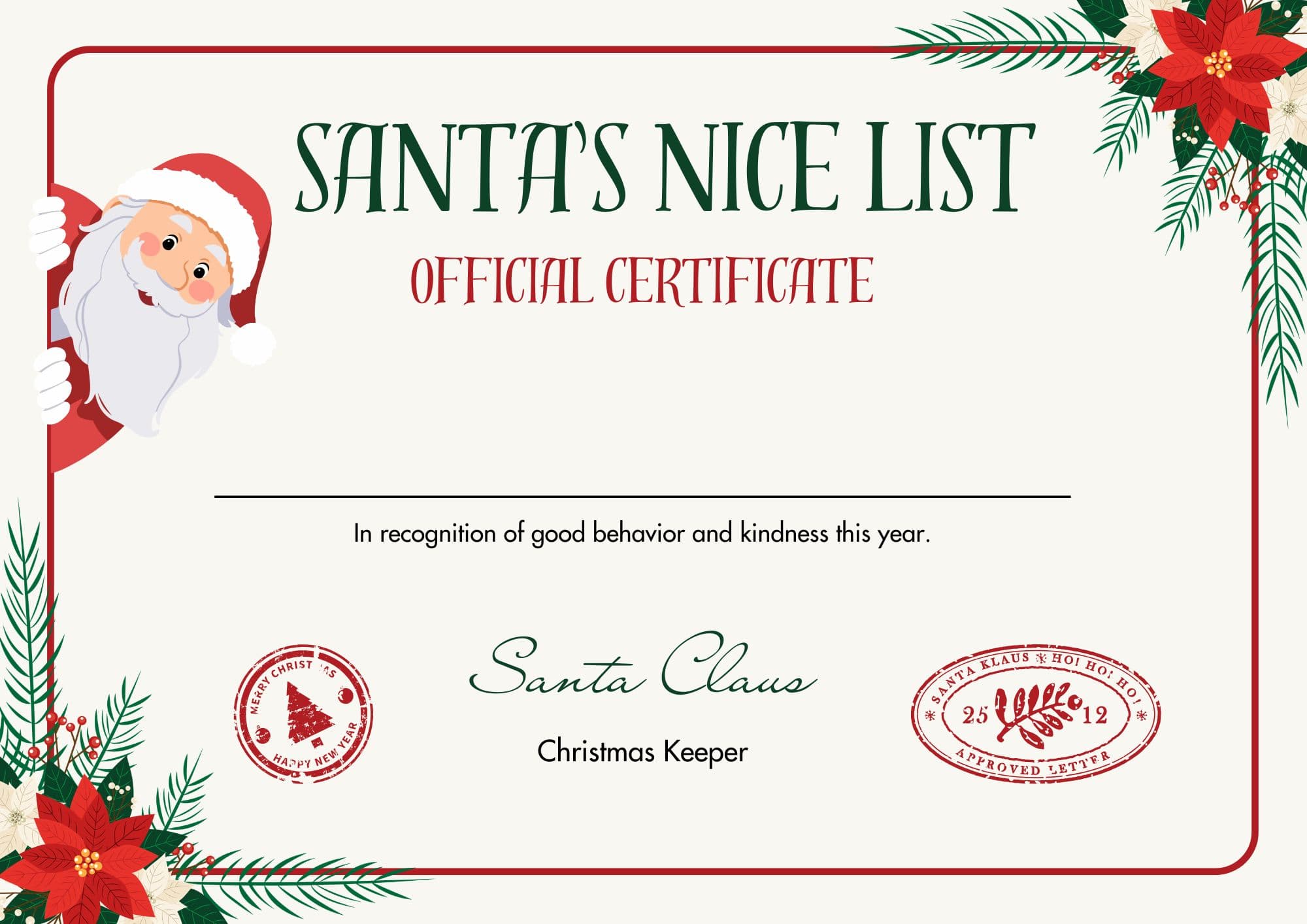
Printable Letter From Santa + Nice List Certificate
Two beautiful keepsakes from the North Pole — a personalized-style letter from Santa and an official Nice List certificate. Enter your email and Santa will unlock both PDFs for you, free.
A paper letter can't say your child's name out loud
Santa can. Watch a 30-second example — he greets your child by name, city and their proudest moment of the year.
Get a video from Santa