

Quick answer
- Ask about interests, sizes, favorite colors, food restrictions, and gift preferences.
- Keep the questionnaire short enough to finish in five minutes.
- Set a clear spending limit, submission deadline, and gift exchange date.
- Share answers only with the assigned gift giver or the organizer.
- Use open-ended prompts so people can add helpful details.
What Is a Secret Santa Questionnaire?
A secret Santa questionnaire is a short form that collects gift preferences before a holiday gift exchange. It should ask about hobbies, favorite foods, clothing sizes, allergies, dislikes, and practical wish-list ideas so the assigned shopper can choose confidently while keeping the recipient’s identity private. A good form takes about five minutes to complete and gives enough direction without removing the fun of surprise.
Secret Santa is commonly associated with anonymous gift exchanges in offices, schools, families, and community groups. The modern custom is often connected with charitable and anonymous gift-giving traditions, including the “Secret Santa” practice popularized in the United States during the twentieth century. You can read a useful historical overview in this Wikipedia article on Secret Santa. The name and exact rules vary, but the goal is consistent: each person gives one gift to one secretly assigned recipient.
What the questionnaire should accomplish
- Give the shopper several safe gift directions rather than one rigid answer.
- Identify allergies, dietary restrictions, and accessibility needs before buying.
- Prevent duplicate gifts when the exchange includes close family members.
- Make participation easier for children, coworkers, and people who do not know one another well.
- Protect the surprise by separating answers from the public participant list.
The form is not meant to ask for a full shopping list. It works best as a conversation starter. For example, “I enjoy watercolor painting and cozy mystery novels” gives useful inspiration while leaving room for creativity. If your family also wants to add a personal holiday moment, a letter from Santa can complement the exchange without revealing who bought which present.
How to Build a Secret Santa Questionnaire Step by Step
Build the questionnaire before drawing names, or send it immediately after the assignments are made. The best timing depends on your group. For a workplace exchange, send it one to two weeks before the party. For children, ask a parent or guardian to help complete it. Keep every question relevant to gift selection, and explain who will see the answers.
Step-by-step setup
- Name the exchange. Write the group name, gift-giving date, and organizer’s contact information at the top.
- State the spending limit. Say whether the limit includes tax, shipping, wrapping, or homemade gifts. A clear range, such as $20 to $25, avoids awkward differences.
- Add basic preferences. Ask for favorite colors, hobbies, books, games, sports, music, restaurants, and relaxing activities.
- Cover practical details. Include shirt, sweater, sock, shoe, or glove sizes only when relevant. Add dietary restrictions, allergies, scents to avoid, and accessibility needs.
- Ask for dislikes. A short “Please avoid” field can prevent unwanted candles, spicy foods, certain materials, or novelty items.
- Request three ideas. Ask for three gift suggestions at different levels of specificity. This gives the shopper options while preserving choice.
- Explain privacy. Tell participants that the organizer may see all answers, but only the assigned shopper should receive the recipient’s responses.
- Set a deadline. Choose a specific date and time, such as December 5 at 8:00 p.m., and send one reminder before it passes.
- Confirm delivery details. State whether gifts should be wrapped, labeled with the recipient’s name, delivered to a party, or mailed directly.
- Test the form. Complete it yourself on a phone. Check that every required field is easy to understand and that no answer accidentally exposes the assignment.
Avoid collecting information you do not need. A home address, phone number, or detailed family information can create unnecessary privacy concerns. If gifts are mailed, collect delivery details separately and share them only with the organizer or the person responsible for shipping.
Make it magical with a video from Santa
Santa says your child's name, city and proudest achievement — in a real personalized video. Watch a free preview in 60 seconds.
The Best Questions for a Secret Santa Questionnaire
A strong secret Santa questionnaire uses a mix of quick-choice questions and optional written prompts. Checkboxes are fast for busy adults, while open fields reveal personality and context. Do not make every answer mandatory. Someone may not have a favorite movie, clothing size, or preferred store, and forcing an answer can lead to inaccurate information.
Core questions to include
- What are three hobbies or interests you enjoy right now?
- What are your favorite colors, flavors, scents, or patterns?
- What do you like to read, watch, listen to, cook, collect, or do outdoors?
- Do you prefer practical gifts, edible treats, experiences, handmade items, or surprises?
- What are three gift ideas that fit the spending limit?
- What gifts, colors, materials, foods, or scents should your shopper avoid?
- Do you have allergies, dietary restrictions, or accessibility needs the shopper should know about?
- What clothing or accessory sizes are useful, if any?
- Would you enjoy a gift connected to a favorite team, hobby, book, or holiday tradition?
- Is there anything else that would help your Secret Santa choose thoughtfully?
Use specific examples in the questions. “Favorite foods” is broad, while “favorite tea, coffee, chocolate, snack, or baked treat” helps participants answer. If children are involved, ask about current interests because preferences change quickly. A child who loved dinosaurs in July may be focused on art supplies or soccer in December. For adults, ask about practical boundaries such as fragrance sensitivity, desk space, or whether they already own common accessories.
Do not ask for protected or overly personal information. The questionnaire should support a pleasant gift choice, not become a personal profile. Keep the tone warm, optional, and nonjudgmental.

Copy-and-Paste Secret Santa Questionnaire Templates
Use the short template below for a workplace, classroom, club, or extended-family exchange. It covers the details a shopper normally needs and can be pasted into an email, shared document, or online form: “Name: ____. Three hobbies or interests: ____. Favorite colors: ____. Favorite snacks, drinks, books, games, or activities: ____. I prefer: practical gifts / treats / handmade gifts / experiences / surprises. Three gift ideas within the limit: 1) ____ 2) ____ 3) ____. Please avoid: ____. Allergies or dietary restrictions: ____. Useful size information: ____. Anything else my Secret Santa should know: ____. I will submit this by: ____.”
For children, use a parent-assisted version with simpler language: “My name is ____. I like playing ____, making ____, reading about ____, and watching ____. My favorite colors are ____. I would be excited to receive ____, ____, or ____. Please do not choose ____. I cannot have ____. My size is ____ if needed. One thing I would like my Secret Santa to know is ____.” A parent can review the answers for safety, accuracy, and realistic expectations.
How to keep templates useful
- Keep the adult version to about 10 questions and the child version to 6 or 7 prompts.
- Use a spending limit directly in the template so ideas stay realistic.
- Include an “other” option after lists of hobbies, foods, and gift types.
- Let participants write “no preference” instead of inventing an answer.
- Ask for several ideas rather than one exact product or single store.
If a participant gives only vague answers, the organizer can privately ask one follow-up question. For example, “You mentioned cooking. Would you prefer baking supplies, recipe inspiration, or a food-related treat?” One focused question is less intrusive than sending the entire form again.
How to Manage Answers, Assignments, and Deadlines
A questionnaire only helps when the organizer manages the answers carefully. Create one private master list with each participant’s name, contact method, questionnaire responses, assigned recipient, and completion status. Do not post the full response sheet in a group chat. Even if the exchange is meant to be playful, allergies, addresses, and other personal details should remain limited to people who need them.
A simple holiday timeline
- November 20–30: invite participants and explain the rules.
- December 1: collect completed questionnaires and confirm the final participant list.
- December 2: assign recipients and send each shopper only the relevant answers.
- December 5–7: remind anyone who has not submitted a form or acknowledged the assignment.
- December 10–15: confirm that gifts are purchased or prepared, without asking participants to reveal details.
- Exchange day: label gifts clearly and keep a backup plan for late, damaged, or missing packages.
If the exchange includes mailed gifts, set the mailing deadline earlier than the party date. Weather, carrier delays, and incorrect addresses can affect delivery. For a virtual family event, decide whether everyone opens gifts at the same time or records a short reaction. A personalized video from Santa can add a separate surprise for children, but it should not reveal the identity of the Secret Santa shopper.
Have a substitution rule. If someone leaves the group, the organizer should either reassign that recipient or provide a backup gift. Keep a small emergency budget if the group agrees to one. Clear procedures protect the experience and prevent one participant from being forgotten.
Common Secret Santa Questionnaire Mistakes to Avoid
Most Secret Santa problems come from unclear rules rather than poor intentions. A form can be beautifully designed and still fail if participants do not know the spending limit, deadline, privacy expectations, or delivery plan. Review the questionnaire alongside the exchange instructions before sending it.
Frequent mistakes and practical fixes
- Asking too many questions: A 30-question form feels like homework. Keep essential questions required and make personal preference prompts optional.
- Leaving the budget vague: “Small gift” means different things to different people. State a dollar range and whether shipping or tax counts.
- Ignoring allergies and dislikes: A food basket, scented item, or wool accessory may be unsuitable. Include a clear avoidance field.
- Requiring exact product links: Links can make the exchange feel like a purchase order. Ask for categories and examples instead.
- Sharing all answers publicly: Send only the assigned recipient’s responses to each shopper.
- Forgetting children’s changing interests: Ask about current hobbies and have an adult verify the answers.
- Missing size details: If clothing is allowed, request the relevant size and preferred fit. Otherwise, tell shoppers to avoid clothing.
- Allowing late forms without follow-up: Set a deadline and contact missing participants privately.
- Failing to plan for remote participation: Decide how gifts will be shipped, when they will be opened, and who pays postage.
- Revealing the assignment through wording: Do not ask a participant questions that make it obvious who is shopping for whom.
Another mistake is treating a questionnaire as a guarantee that the recipient will love every gift. The answers are guidance, not a contract. Encourage shoppers to choose something thoughtful within the rules, wrap it securely, and include a short note. That personal effort often matters as much as the object itself.
Free download
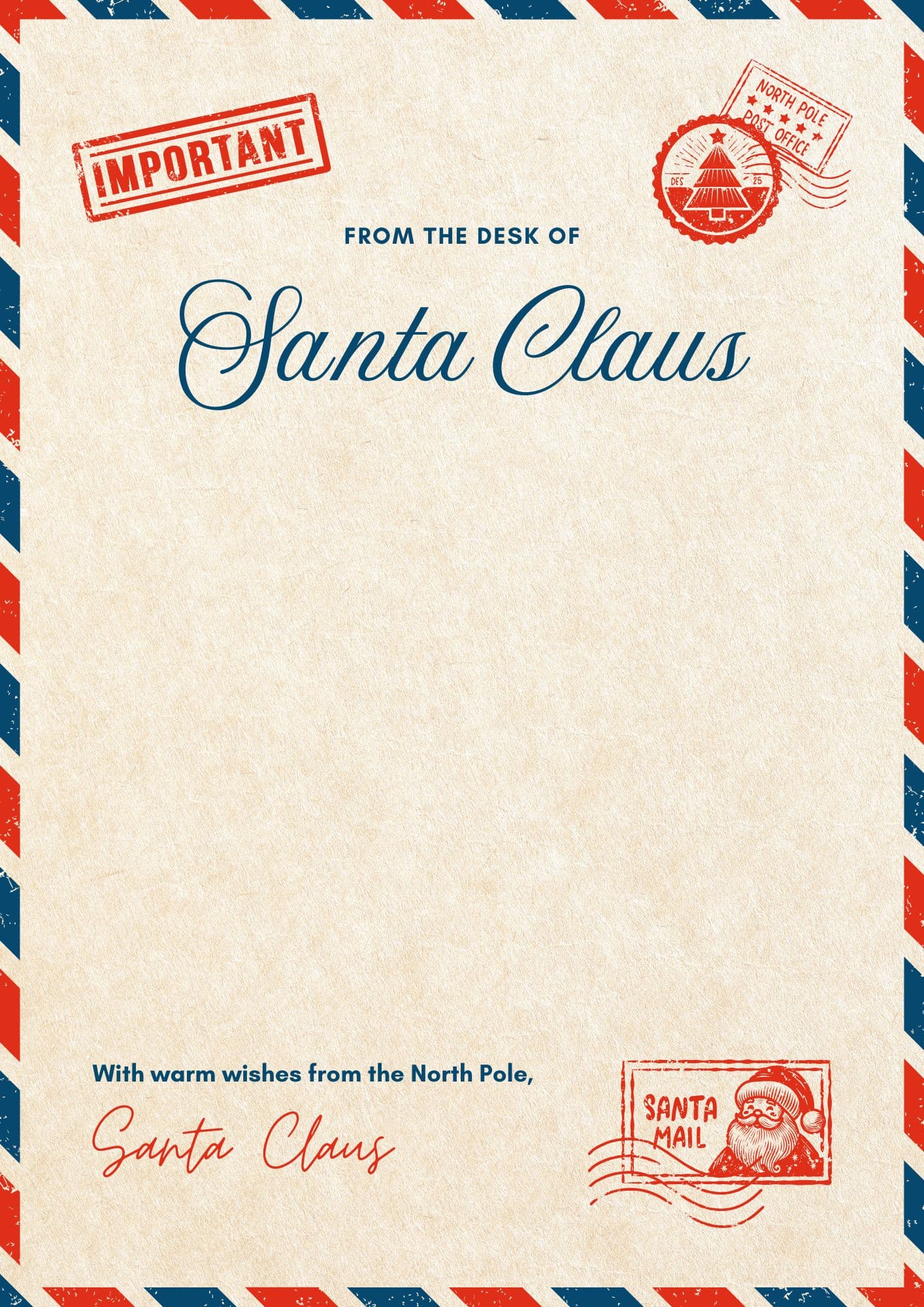
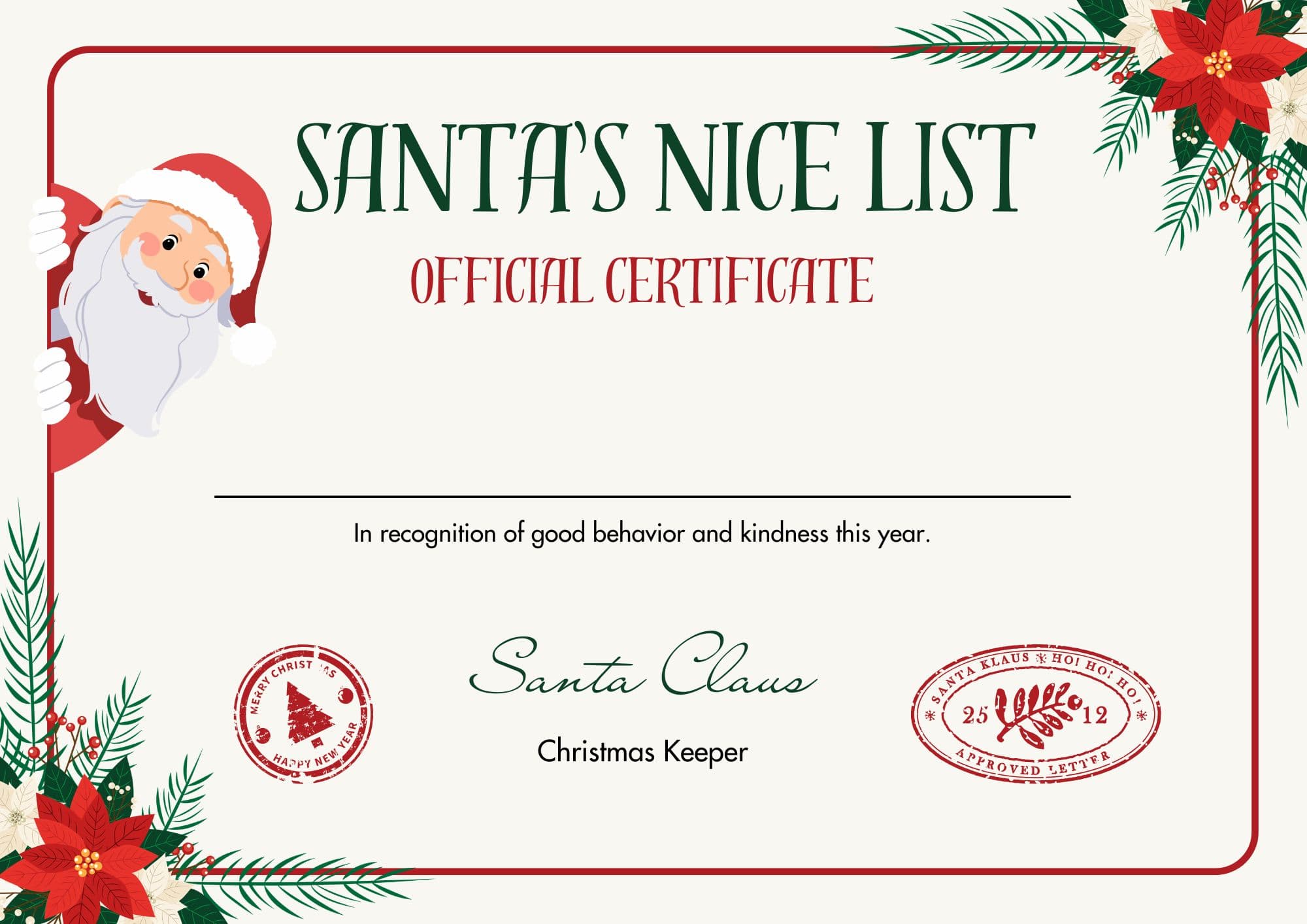
Printable Letter From Santa + Nice List Certificate
Two beautiful keepsakes from the North Pole — a personalized-style letter from Santa and an official Nice List certificate. Enter your email and Santa will unlock both PDFs for you, free.
A paper letter can't say your child's name out loud
Santa can. Watch a 30-second example — he greets your child by name, city and their proudest moment of the year.
Get a video from Santa