

Quick answer
- White elephant is a group game in which people bring wrapped gifts and may steal gifts during their turn.
- Secret Santa privately assigns each person one recipient, so every guest shops for a specific person.
- Choose white elephant for laughter and unpredictability; choose Secret Santa for thoughtful, personal gifts.
- For children, Secret Santa is usually easier to understand, while white elephant works best with simple rules and adult guidance.
White Elephant vs Secret Santa: The Quick Difference
White elephant is a group gift-swapping game built around surprise, stealing, and laughter. Secret Santa privately assigns each participant one person to shop for, making it a more personal exchange with a clear recipient. Choose white elephant when your group wants a competitive party game; choose Secret Santa when guests want a thoughtful one-to-one gift.
In a white elephant exchange, everyone brings one wrapped gift without naming the intended recipient. Players draw numbers or follow a set turn order. A player may open a new package or take a gift someone else has already opened. In Secret Santa, an organizer assigns names before the event, often with paper slips or a private online drawing. Each person buys one gift for that assigned recipient and reveals the giver later.
- White elephant focuses on the group experience. The gift may be useful, silly, unusual, or deliberately funny.
- Secret Santa focuses on the individual recipient. The shopper considers that person’s interests, age, hobbies, or wish list.
- White elephant usually has one shared spending limit and one common pool of gifts.
- Secret Santa usually has one spending limit, but each gift is selected with a particular person in mind.
- White elephant needs turn-order and stealing rules. Secret Santa needs assignments and confidentiality.
At a workplace holiday party, white elephant gives coworkers an easy reason to talk, even when they rarely work together. In a family with children, Secret Santa can teach kindness and careful noticing: a child has to remember that Maya likes drawing or that Grandpa drinks tea. A personalized video from Santa can make a child’s assigned gift feel special without changing the exchange rules.
How a White Elephant Gift Exchange Works
A standard white elephant exchange needs three things: one wrapped gift per player, a turn order, and agreed stealing limits. Set the spending range before the party. A range such as $15 to $25 keeps gifts reasonably balanced, while a “bring something from home” version can cost nothing. Ask guests to avoid used items unless the group specifically wants a regift theme. A clear theme also prevents one person from bringing a $5 novelty mug while another brings a $25 board game.
Simple rules for a smooth game
- Place all wrapped gifts in the center of the room.
- Give each player a number. Number one opens a gift.
- The next player may open a wrapped gift or steal an opened gift.
- A stolen player immediately chooses another wrapped gift or steals from someone else.
- Do not allow an immediate steal-back. This prevents two players from repeating the same move.
- Set a limit, such as three steals per gift, and end the game when every player has one gift.
Some groups let the first player make one final swap at the end. Others freeze every gift after its third steal. Choose one rule and explain it before the first turn; changing the rules halfway through creates arguments, especially with children. The name comes from stories about rare white elephants in Siam, now Thailand, where the animals were associated with royal status and costly care. The history of the white elephant exchange is more complicated than the modern party game, so treat the term as a traditional name rather than a literal instruction to give an elephant.
Make it magical with a video from Santa
Santa says your child's name, city and proudest achievement — in a real personalized video. Watch a free preview in 60 seconds.
How Secret Santa Works and Why It Feels More Personal
Secret Santa begins before the party. Write every participant’s name on a slip, draw assignments privately, and give each person one recipient. A good organizer also gathers practical preferences: favorite colors, snacks, books, sports, crafts, and allergies are more useful than a vague instruction to “buy anything.” For children, an adult should check assignments and help keep the secret. If the group lives in different cities, the organizer can send each assignment by private message and set one mailing deadline.
A practical Secret Santa plan
- Set a firm budget and a deadline for buying or mailing the gift.
- Decide whether homemade gifts, gift cards, books, or treats are allowed.
- Ask participants to list three likes and three dislikes.
- Use a no-self-assignment rule and avoid assigning partners or siblings if that makes shopping too easy.
- Reveal the giver after each gift is opened, or wait until everyone has guessed.
Secret Santa is connected with the wider custom of anonymous holiday giving, but its exact modern origin is not tied to one universally accepted inventor. The exchange is often associated with Christmas traditions in the United States and other English-speaking countries. In many European communities, gifts are linked with Saint Nicholas, whose feast day is December 6. The Saint Nicholas tradition helps explain why thoughtful gift-giving is often presented as a quiet act of generosity rather than a contest.
Families can add a note, drawing, or short compliment to make the reveal warmer. A child might include a letter from Santa using a personalized Santa letter as a separate keepsake, rather than using Santa to identify the Secret Santa giver. For a classroom, teachers can collect the notes first and check that every child receives one.

White Elephant vs Secret Santa: Pros, Cons, and Best Uses
Neither exchange is automatically better. The right format depends on group size, relationships, budget, and tolerance for competition. Eight coworkers may enjoy white elephant because the game fills awkward pauses and gives everyone a shared story. A family of six may prefer Secret Santa because each person receives a gift chosen with that individual in mind.
White elephant pros and cons
- Pros: lively, easy to organize, entertaining for mixed groups, and less pressure to find a perfect gift.
- Pros: guests can bring humorous items, practical items, or themed gifts.
- Cons: someone may end with a gift they do not want.
- Cons: stealing can upset younger children or guests who dislike competition.
- Cons: very large groups may need a longer game and stricter turn management.
Secret Santa pros and cons
- Pros: each person receives a deliberate choice, and one gift per guest keeps spending predictable.
- Pros: it works well for coworkers, classrooms, extended families, and long-distance groups.
- Cons: a forgotten assignment or late shopper can leave someone without a gift.
- Cons: poor preference information can lead to mismatched presents.
- Cons: secrecy may be difficult for preschoolers who want to announce everything.
Choose white elephant when the main goal is laughter, movement, and an unpredictable finish. Choose Secret Santa when the main goal is personal attention and controlled spending. If your group includes both preferences, run a short Secret Santa exchange and add a separate silly white elephant round with inexpensive gifts and clearly labeled rules. Keep the two gift pools separate so nobody assumes a $20 Secret Santa present can be traded during the game.
Which Christmas Exchange Is Best for Kids?
Secret Santa is usually the easier choice for children because the idea is concrete: “You picked Maya, so you choose something Maya will enjoy.” It gives children practice thinking about another person. Keep the budget modest and offer examples such as a coloring book, a puzzle, a cozy pair of socks, or a favorite snack. An adult should confirm that the item is safe and suitable for the recipient’s age, particularly when the group includes toddlers or children with food allergies.
White elephant can work for children ages seven and up when the gifts are equal in value and the rules are visible. Avoid describing a steal as taking something away. Say, “You may trade for that opened gift, and the other player gets another turn.” Limit each gift to one steal for younger groups. Give preschoolers the option to open a new gift instead of making them compete. A child who becomes upset should be allowed to pause or choose from an unopened package without being teased.
A kid-friendly explanation
Try this wording: “Secret Santa means you quietly choose one person and give them a gift. White elephant means everyone brings a wrapped gift, and we take turns opening or trading for gifts. The goal is to have fun, not to win the best present.” This explanation separates generosity from getting the most valuable item and gives children language for the trade.
You can also make the exchange part of a broader family tradition. A child might check a Christmas countdown, bake gingerbread cookies, or record a kind message for the assigned person. Clear expectations help children enjoy the surprise without feeling embarrassed, pressured, or disappointed. Let children help wrap gifts, but keep name labels and Secret Santa assignments out of reach until the reveal.
Planning Rules, Themes, and Food for the Party
A successful exchange starts with a short written plan. Include the date, guest list, budget, gift theme, wrapping instructions, and end time. For a white elephant party, themes create better results than random shopping. Try “cozy night,” “under $20,” “made in your state,” “book and bookmark,” or “something useful in the kitchen.” For Secret Santa, send assignments at least two weeks ahead so guests have time to shop, make a gift, or order an item.
- For children, serve cocoa, apple cider, clementines, popcorn, and decorated sugar cookies.
- For an office party, offer vegetarian options such as spinach-artichoke dip, roasted vegetables, and cheese with crackers.
- For a family gathering, traditional American holiday foods may include roast turkey, mashed potatoes, cranberry sauce, and pumpkin pie.
- Label common allergens, especially peanuts, tree nuts, dairy, and gluten.
- Keep drinks and breakable decorations away from the gift table.
A timed schedule prevents the exchange from taking over the entire event. Allow about five minutes per person for white elephant because stealing creates extra turns. Secret Santa usually needs less time, especially if gifts are opened in a circle. Take a group photo before opening presents, then keep a spare neutral gift available in case someone forgets their contribution. For a group of twelve, placing numbers in a bowl and writing the six basic rules on a card can save several minutes of repeated explanation.
For a more memorable family evening, add a short Santa message before the exchange. The Santa chat experience can help children practice what they want to say about kindness, sharing, and thoughtful giving.
Free download
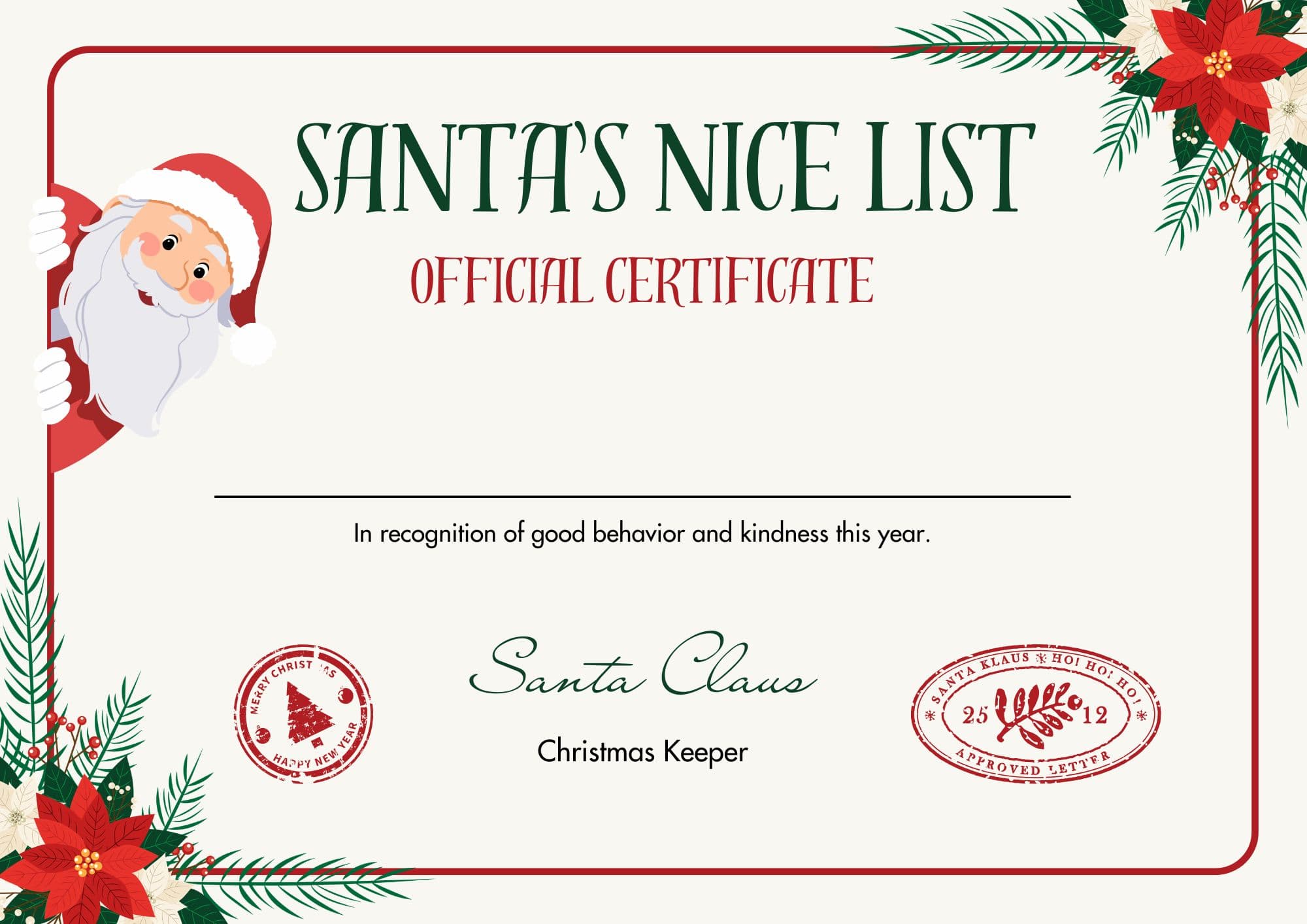
Printable Letter From Santa + Nice List Certificate
Two beautiful keepsakes from the North Pole — a personalized-style letter from Santa and an official Nice List certificate. Enter your email and Santa will unlock both PDFs for you, free.

A paper letter can't say your child's name out loud
Santa can. Watch a 30-second example — he greets your child by name, city and their proudest moment of the year.
Get a video from Santa