Quick answer
- Use 8 to 12 clues for young children and 15 to 20 for older kids.
- Hide clues in safe, familiar places such as a stocking, bookshelf, kitchen table, or mitten basket.
- Match the wording to each child’s reading level, then add a small task or riddle for extra fun.
- End with a meaningful surprise, such as a family activity, a letter from Santa, or a new book.
How to Plan Christmas Scavenger Hunt Clues
Christmas scavenger hunt clues are short riddles or directions that lead children from one safe hiding place to the next. For ages 3 to 5, use 5 to 8 picture-based clues; for ages 6 to 9, use 8 to 12 simple riddles; for older children, use 12 to 20 clues with codes, maps, or challenges. Start with the final surprise, then plan the route backward so every clue leads somewhere logical. A route that moves from the bedroom to the kitchen to the living room is easier to follow than one that sends children back and forth.
- Choose a finish. Good options include a wrapped book, a family movie basket, new pajamas, a cookie-decorating kit, or a handwritten note.
- Write the route on paper before hiding anything. Number the clues privately so you can recover quickly if one goes missing.
- Keep the first clue visible. Place it beside the breakfast plate, inside a Christmas stocking, or under the child’s pillow.
- Use one clue per location. Avoid sending children across the house repeatedly, especially if younger siblings are joining.
- Check every hiding spot for hazards. Do not place paper near candles, heaters, sharp tools, medicine, or high shelves.
- Add a time limit only for older children. Ten to fifteen minutes can create excitement without making the hunt feel stressful.
- Prepare a backup clue. If a note is accidentally thrown away, a spare copy keeps the game moving.
A personalized video from Santa can open the hunt with a clear mission, while the final clue can point to a family keepsake. Keep the game playful rather than competitive when children have different ages or reading abilities. If one child reads faster, let that child read aloud while another searches. You can also give each participant a job: clue reader, map holder, object finder, or keeper of the discovered cards.
Easy Christmas Scavenger Hunt Clues for Toddlers
Toddlers need clues they can understand through a picture, a familiar object, or one short sentence. An adult should read each clue aloud and walk nearby. Use large paper, clear drawings, and locations at a child’s eye level. Five or six stops are usually enough for a two- or three-year-old; ten stops can feel long when the child is tired, hungry, or distracted by presents.
- “Look where we keep your shoes. Your next Christmas surprise is waiting there.” Hide the clue beside the shoe basket.
- “Find something soft and red.” Place the next note near a red blanket, scarf, or cushion.
- “Where do your favorite bedtime books sleep?” Hide the clue inside the child’s book basket.
- “Touch the biggest pillow on the couch.” Tape the note underneath the cushion, where it is easy to reach.
- “Can you find a jingle bell?” Put the clue beside a bell ornament rather than attaching it to the tree.
- “Look near the place where we eat breakfast.” Hide the next note under a napkin at the kitchen table.
- “Find your warmest hat.” Place a small surprise or clue inside the winter-hat basket.
- “Where do stuffed animals take a nap?” Hide the final clue near the child’s favorite plush toy.
- “Clap three times, then look by the Christmas lights.” Keep the clue on a low table away from electrical cords.
- “Find something shaped like a star.” Place the note beside a star decoration that is not fragile.
For nonreaders, draw a simple tree, shoe, book, bed, or mug on each card. You can also photograph the next hiding place and show the picture on a phone or tablet. Keep the screen in an adult’s hand so the child does not wander while looking at it. Celebrate every discovery with a high five or a short cheer; the goal is exploration, not speed.
Make it magical with a video from Santa
Santa says your child's name, city and proudest achievement — in a real personalized video. Watch a free preview in 60 seconds.
Rhyming Christmas Scavenger Hunt Clues for Kids
Rhyming clues make a holiday hunt feel like a Christmas story. Read each one aloud before children search. The best rhyme gives a useful hint without naming the location too clearly. Test every clue yourself, because a clever rhyme is not helpful if it could describe five different places. Short lines also help children who are still sounding out words.
- “You found this note, so give a cheer. Look where we hang coats for winter gear.” Hide the next clue in the coat closet.
- “Santa likes cookies, warm and sweet. Your next clue waits where we prepare a treat.” Place it on the kitchen counter.
- “When chilly fingers need a mitten, check the basket where they’re hidden.” Use the mitten or glove basket.
- “A Christmas story, old or new, is waiting with a clue for you.” Hide the card inside a holiday book.
- “To find the place where blankets stay, search the basket without delay.” Put the note in a linen basket.
- “You may not see a reindeer here, but look where we store the gear.” Hide it near backpacks or school bags.
- “The next clue is not beneath your bed; look where sleepy heads are fed.” Place it on a nightstand, not under the mattress.
- “Find the room with water and soap. Your next surprise will help you cope.” Put the card beside the bathroom hand towel.
- “The tree is bright, but do not stop. Search near the place where ornaments drop.” Hide it in a safe ornament-storage box.
- “You are close now, so take a look where family games fill up a nook.” Place the final clue in a board-game cabinet.
Use large type for early readers and leave extra space between lines. For a child who struggles with reading, pair each rhyme with a drawing. For siblings, give each child a different starting color so everyone has a personal route. Before the hunt, read the rhymes aloud and replace any word your children do not know. “Linen basket” may need to become “the basket with clean blankets,” while “ornament-storage box” may be clearer as “the box where we keep tree decorations.”
Christmas Scavenger Hunt Clues for Indoor Adventures
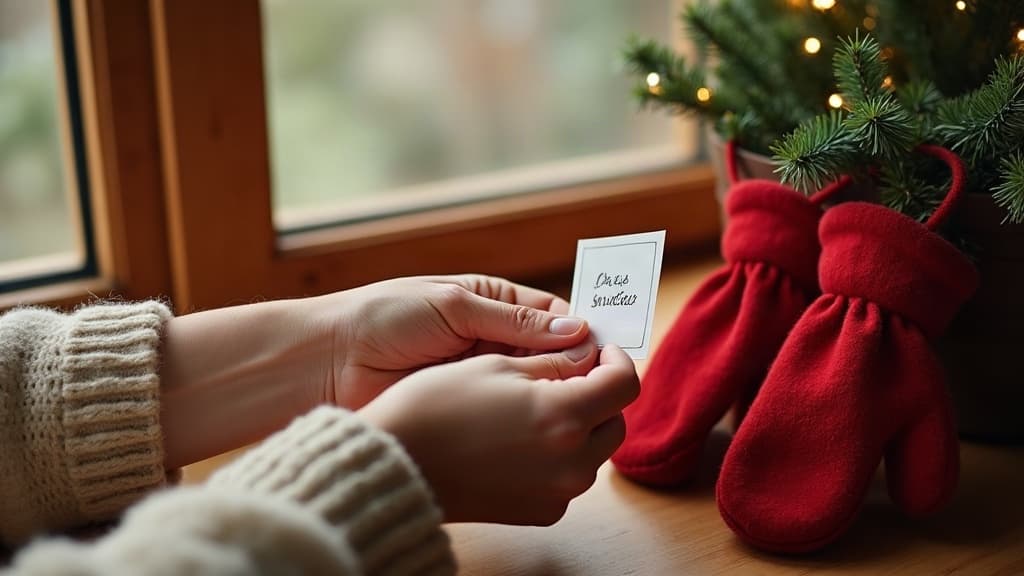
An indoor hunt works well on Christmas Eve, during a snowstorm, or after a large family meal. These clues use common rooms and objects, so they require little preparation. Move breakable decorations out of the search area first. Tell children which rooms are included and which spaces are off-limits. A quick walk-through also catches open doors, loose rugs, hot dishes, and other obstacles adults may overlook during a busy holiday morning.
- “Find the place where cold food stays fresh.” Hide the clue on the refrigerator door, away from magnets and water.
- “Look below the window where sunlight comes in.” Place it behind a curtain tie, not near a blind cord.
- “Search the shelf that holds family games.” Put the clue inside an empty game box.
- “Find the chair where someone reads or rests.” Tape the card underneath the seat.
- “Look for the largest framed family picture.” Hide the clue behind the frame only if it is stable.
- “Find the drawer filled with forks and spoons.” Place the card on top of the organizer, never among sharp utensils.
- “Go to the basket that holds clean towels.” Put the clue between two folded towels.
- “Find the calendar that counts down to Christmas.” Hide the card beside the calendar, not inside a dated pocket if it contains a surprise.
- “Search beside the place where we charge phones.” Keep paper away from plugs, cords, and heat.
- “Your final clue is near something that tells time.” Place it beside a wall clock or mantel clock, never inside the mechanism.
A Christmas countdown can become the first stop or the final reveal; parents can use this Christmas countdown as a simple way to build anticipation. Keep all clues within reach, and use painter’s tape rather than staples or pins on furniture and walls. If a clue must sit near the kitchen, place it after cooking and wipe the surface first. Food spills, wet hands, and flour-covered counters can destroy a handwritten card in seconds.
Outdoor Christmas Scavenger Hunt Clues
An outdoor hunt adds fresh air and movement, but it needs more planning than an indoor game. Check the forecast, provide coats and boots, and inspect the route in daylight. Use weatherproof cards in reusable plastic sleeves. Never hide clues near a road, icy steps, a pond, a grill, or a neighbor’s property. An adult should lead the group near driveways, gates, sheds, and mailboxes, even when the children know the yard well.
- “Find the evergreen that stays green in winter.” Place the clue near a safe evergreen shrub, not on a branch.
- “Look where muddy boots wait before coming inside.” Hide the card beside the outdoor boot tray.
- “Search near the mailbox, but stay away from the street.” An adult should supervise this stop.
- “Find the porch light that welcomes guests.” Tape the clue to the wall beneath the light, away from wiring.
- “Look for the garden tool that rests for winter.” Place the card on a clean, sheltered tool shelf.
- “Find three pinecones, then look beneath the porch bench.” Keep the clue visible and dry.
- “Search where the bird feeder brings winter visitors.” Put the clue on a nearby fence post, never inside the feeder.
- “Find the tallest safe snow pile.” Hide the card beside it, not beneath unstable snow.
- “Walk to the doormat and stamp your feet.” Place the next clue under the mat only if it cannot cause a trip.
- “Your final surprise is waiting where outdoor games sleep.” Use a garage shelf or storage bin that an adult can open.
The tradition of exchanging gifts around Saint Nicholas is associated with December 6, the feast day of the fourth-century bishop from Myra; see the Saint Nicholas history for background. You can borrow that spirit by leaving a small orange, chocolate coin, or clementine at one outdoor stop. Bring the treat indoors before children eat it, and check for allergies if cousins or friends are taking part. In freezing weather, a laminated clue and a small wooden token will hold up better than paper and chocolate.
Christmas Scavenger Hunt Clues With Santa Magic
A Santa-themed hunt works best when every clue feels like part of a story. Tell children that Santa left a route because his sleigh team needs help finding one special package. Keep the fantasy gentle and age-appropriate. Never use a clue to threaten a child or suggest that a mistake will change the gifts they receive. The story can be as simple as a missing parcel, a sleepy reindeer, or an elf who left directions by the stocking.
- “Elf post has arrived. Look where family mail is placed.” Hide the clue in a mail basket.
- “A reindeer needs a rest. Search near the coziest blanket.” Put the card by a throw blanket.
- “Santa’s map points to a place with four legs.” Hide it beneath a sturdy table, not a chair that may tip.
- “Mrs. Claus packed something warm. Look where cocoa cups are stored.” Place the clue in a mug cupboard.
- “The sleigh bells heard music nearby. Search beside the speaker or piano.” Keep paper away from electrical equipment.
- “An elf dropped a mitten. Find the basket where winter accessories sleep.” Use a coat-room basket.
- “Santa checked the family calendar. Find the date marked with a star.” Hide the next clue beside the calendar.
- “The North Pole message says: read a story.” Place the clue inside a Christmas book and pause for one page.
- “Your kindness mission is to bring someone a napkin.” After the task, give the next clue from the dining table.
- “Santa’s final parcel is near the place where family hugs begin.” Lead children to the tree, sofa, or a parent holding the surprise.
For a truly personal ending, let the last card reveal that Santa noticed a child’s recent effort, such as helping a sibling or practicing piano. A separate letter from Santa can make that message part of the keepsake without adding another complicated game step. Write one specific sentence rather than a broad compliment: “You put your shoes away each morning in November,” or “You practiced the chorus three times before the school concert.” Specific details make the note feel written for that child.
How to Finish the Hunt With a Family Surprise
The final stop should reward participation, not just speed. Choose something the whole family can enjoy together. A shared finish also prevents one child from feeling left out when another child reaches the answer first. Place the final item in a basket, gift bag, or clearly marked box so the ending feels complete. If the surprise involves food, wash hands before serving; if it involves an outing, include the date, meeting time, and any clothing children need.
- Create a hot-cocoa finale with cocoa, marshmallows, cinnamon sticks, and child-safe mugs. Keep hot liquid with an adult.
- Wrap a new family book and read it immediately in the same room where the hunt ends.
- Prepare a breakfast reveal with cinnamon rolls, clementines, and scrambled eggs. Serve food after handwashing.
- Hide movie-night supplies, including popcorn kernels, blankets, and a handwritten film-choice card.
- Give each child a small ornament-making kit with paper, washable markers, ribbon, and stickers.
- Reveal a family outing, such as ice skating, a neighborhood light walk, or a December 25 board-game tournament.
- Place a disposable camera or family photo challenge at the finish, then assign three pictures to take together.
- End with kindness coupons, such as “choose the bedtime story” or “help make dessert,” rather than extra objects.
- Use a final puzzle made from six large pieces. Each child earns one piece after completing a clue.
- Add a group photo at the finish. Write the date, December 25, 2026, on the back as a memory marker.
Before starting, explain that the family will open or use the final surprise together. If children have different abilities, give younger children picture cards and older children decoding tasks. The best ending leaves everyone with a story to retell. Keep one clue card and the final note in an envelope with the photograph; next December, you can repeat the route with new hiding places or let the children design the hunt for adults.
Free download
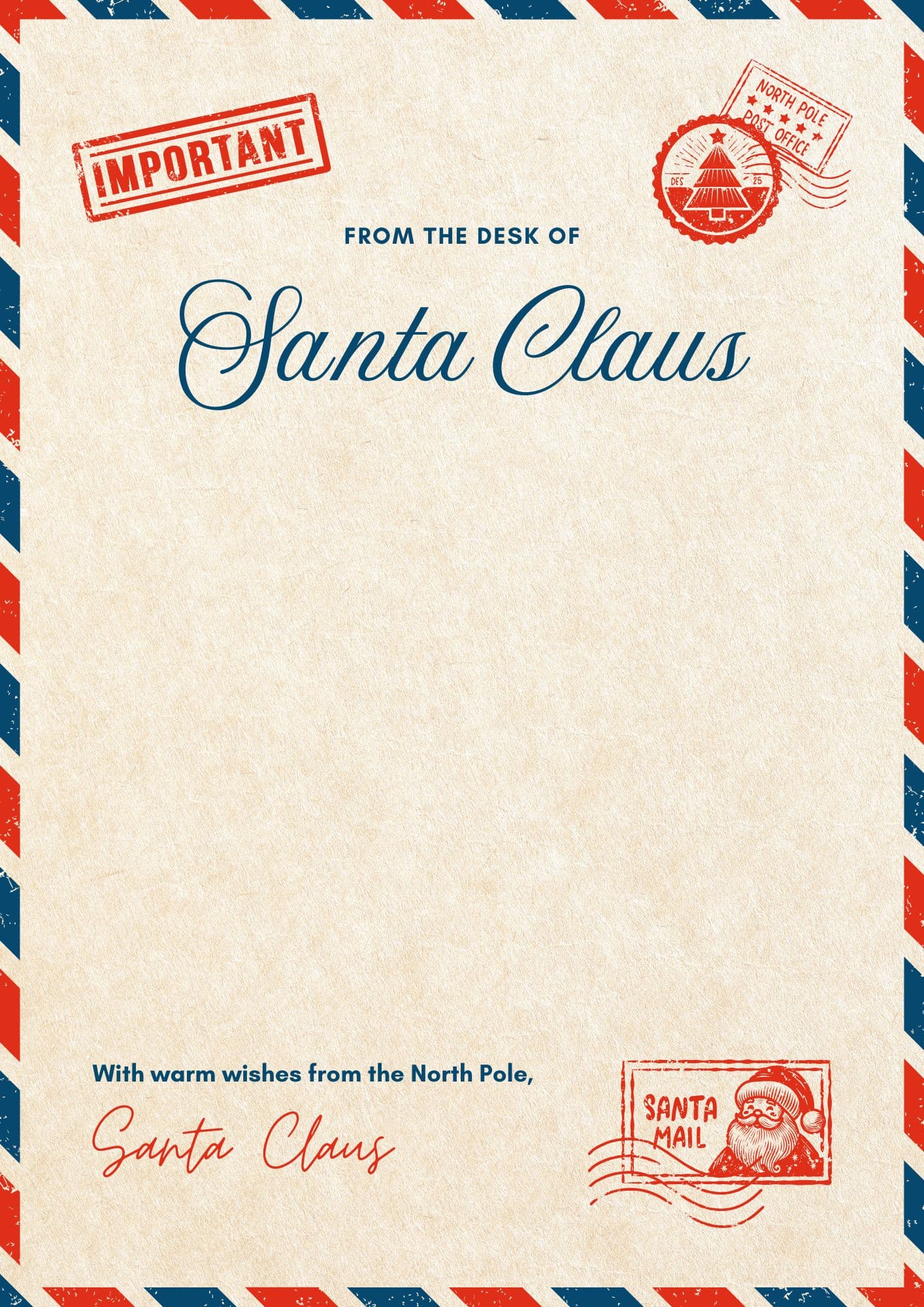
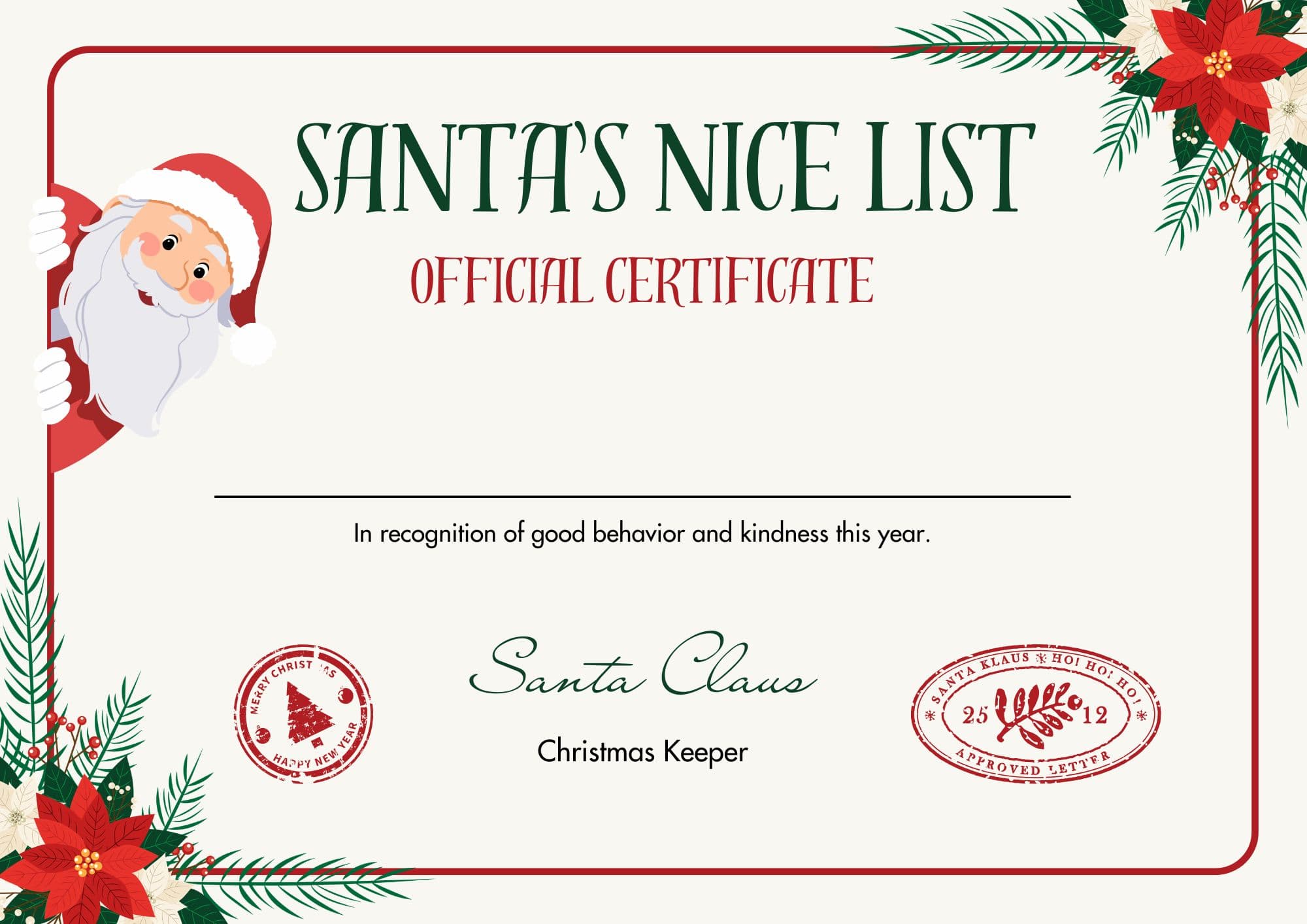
Printable Letter From Santa + Nice List Certificate
Two beautiful keepsakes from the North Pole — a personalized-style letter from Santa and an official Nice List certificate. Enter your email and Santa will unlock both PDFs for you, free.
A paper letter can't say your child's name out loud
Santa can. Watch a 30-second example — he greets your child by name, city and their proudest moment of the year.
Get a video from Santa